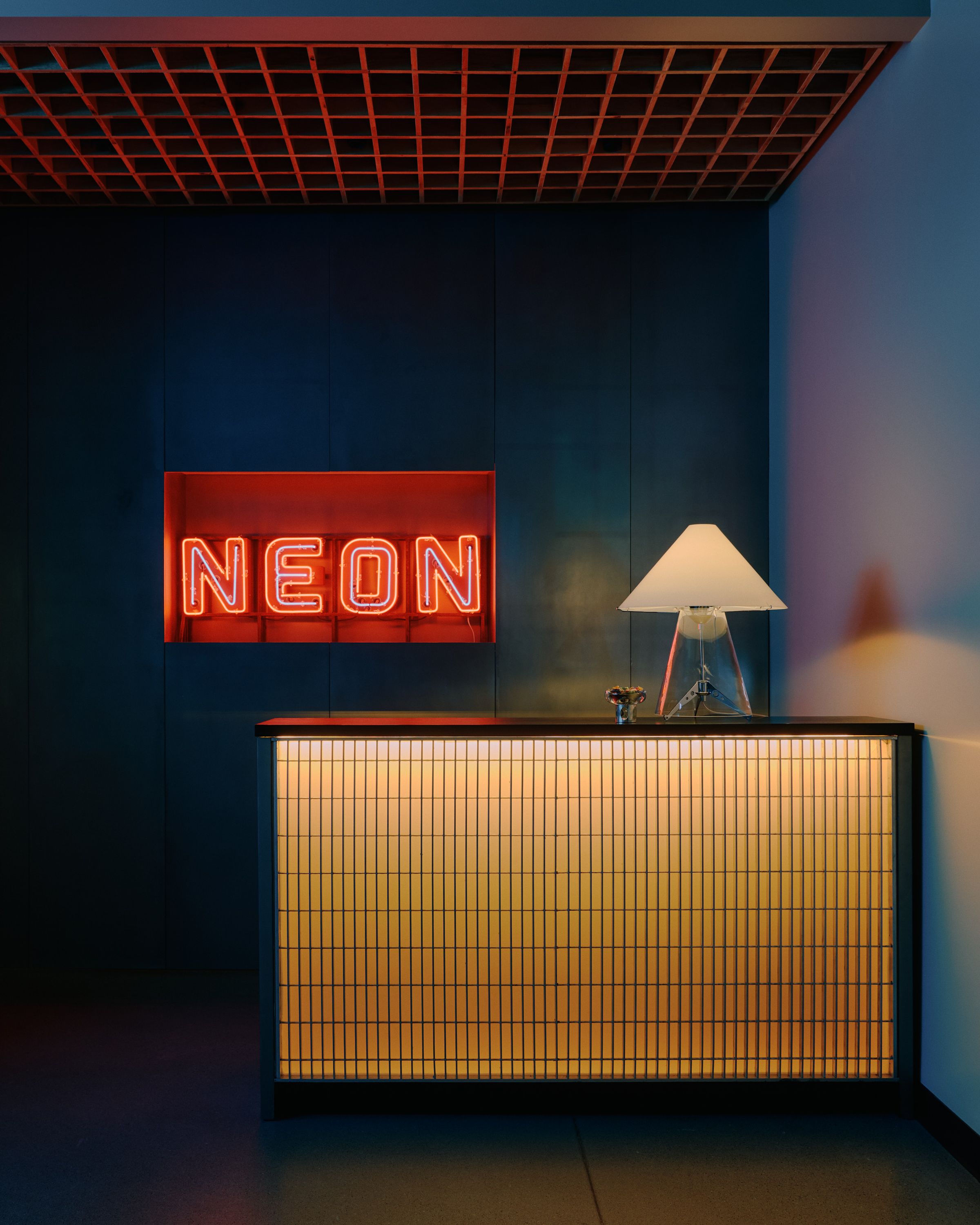
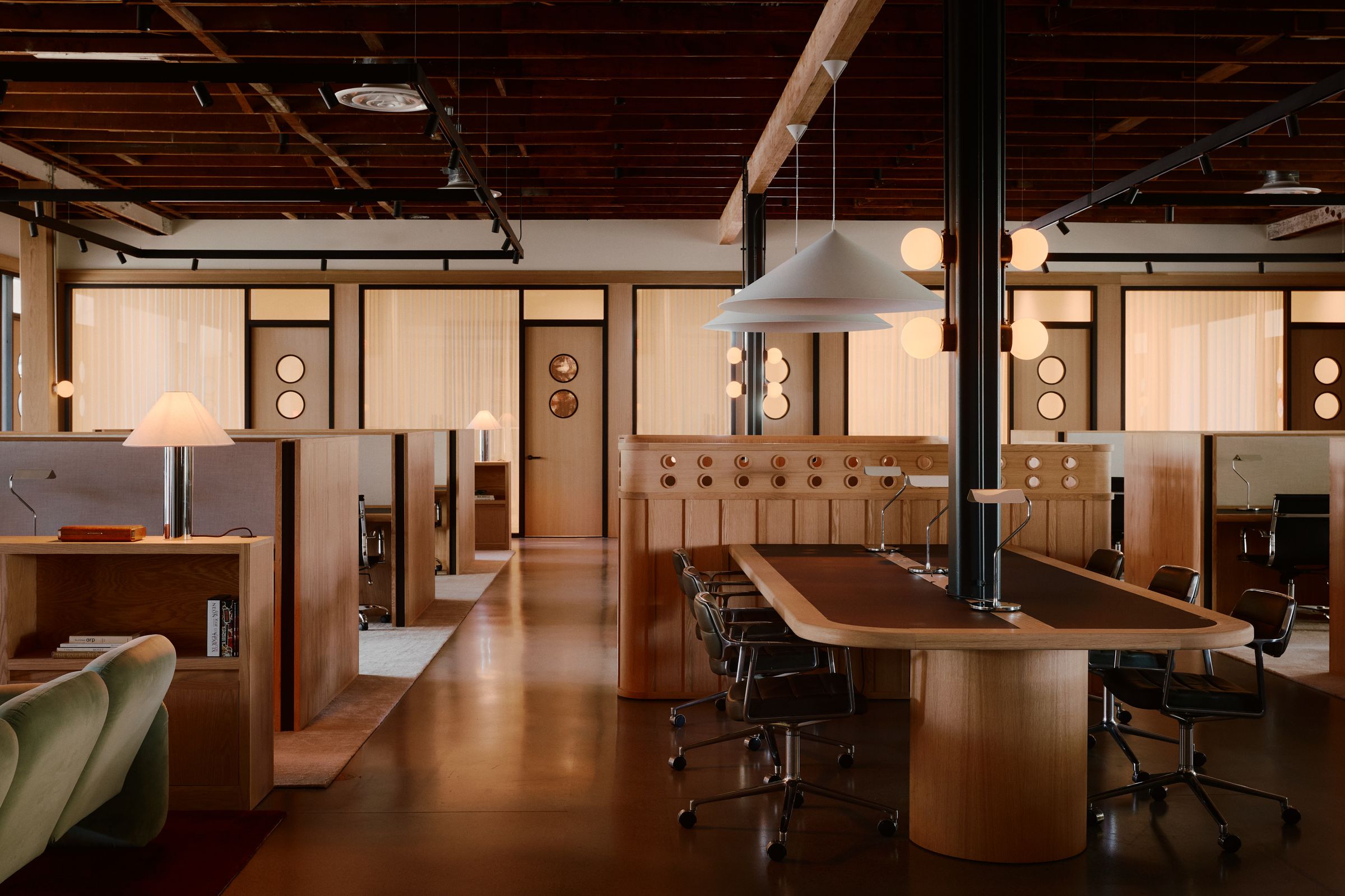
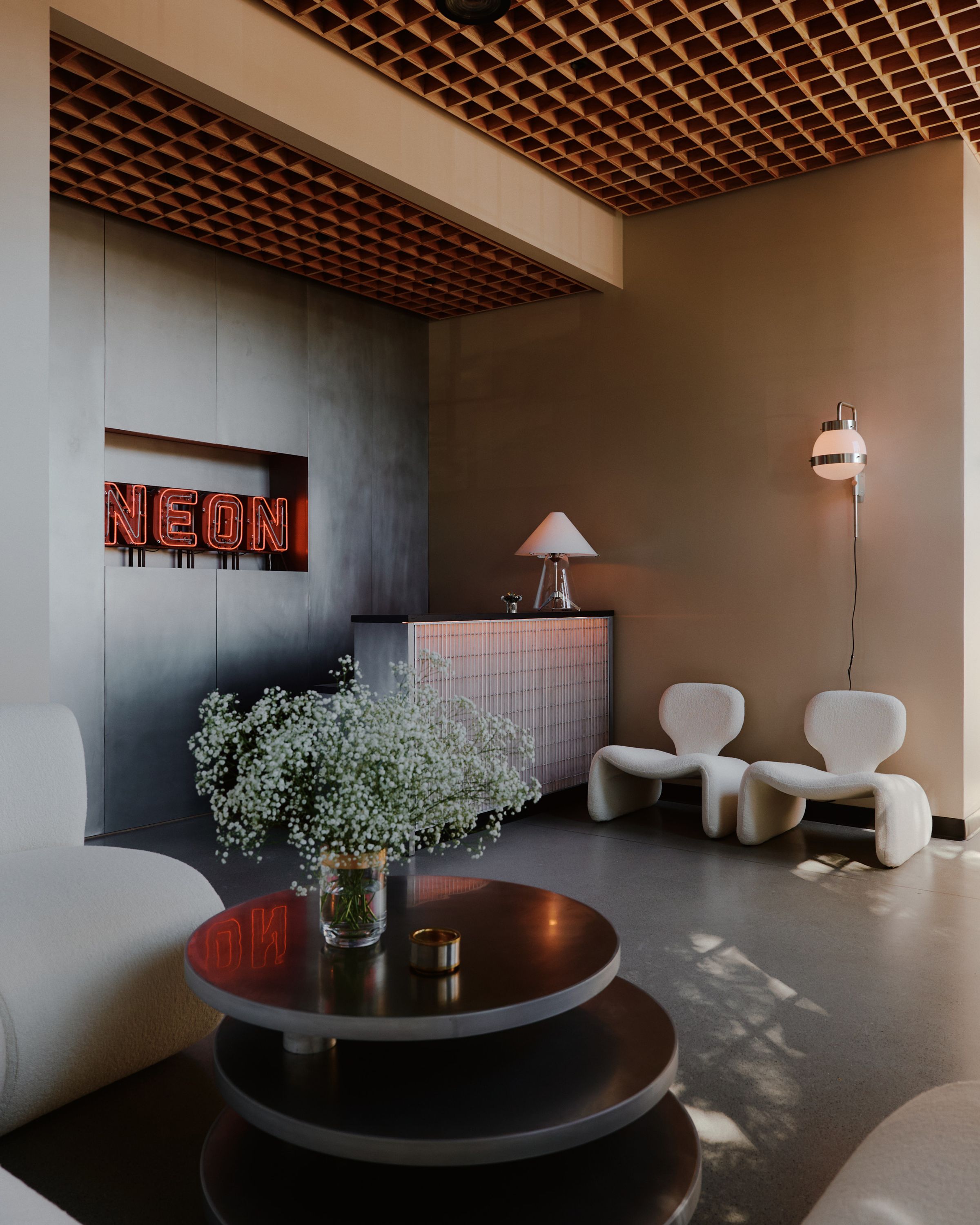
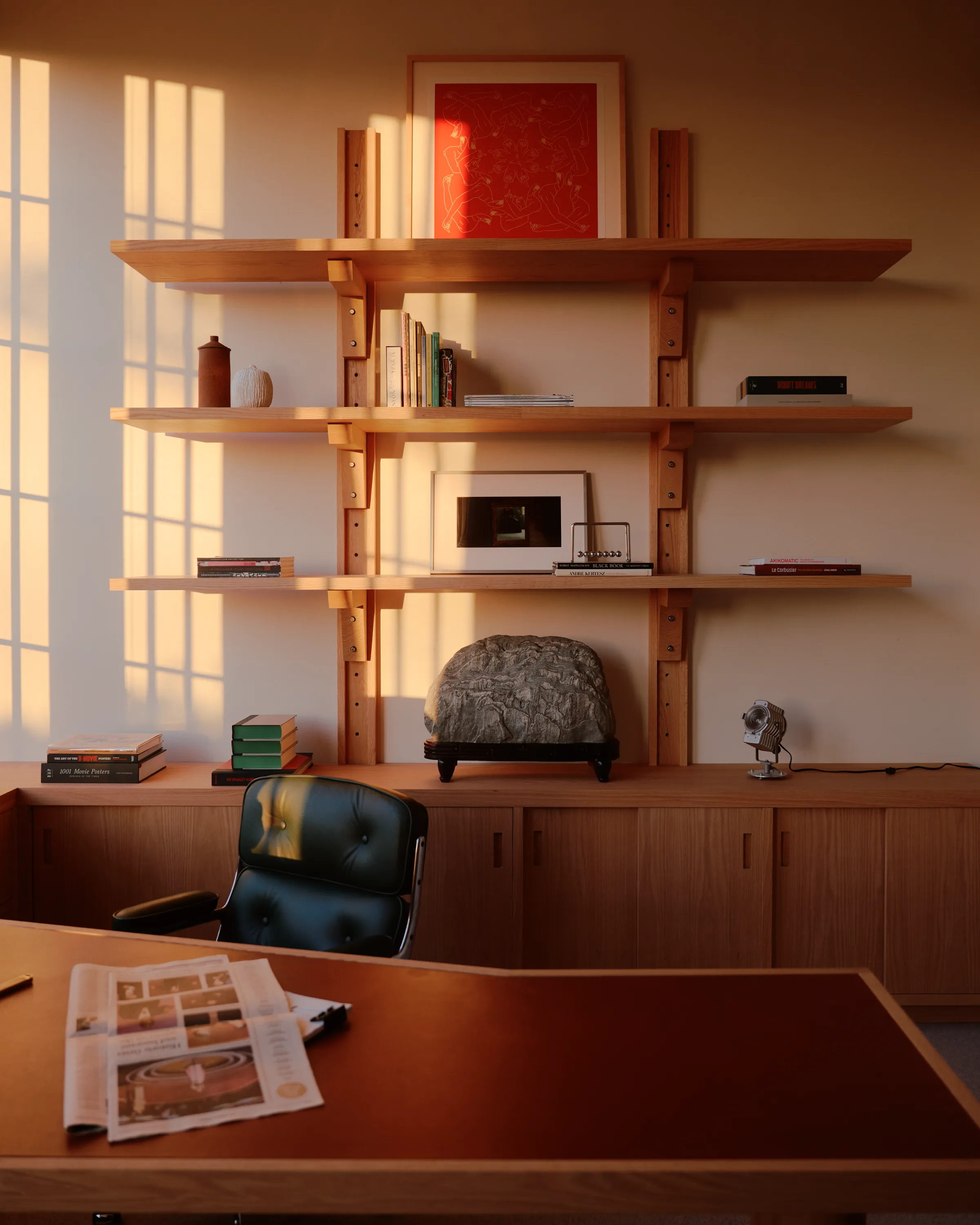
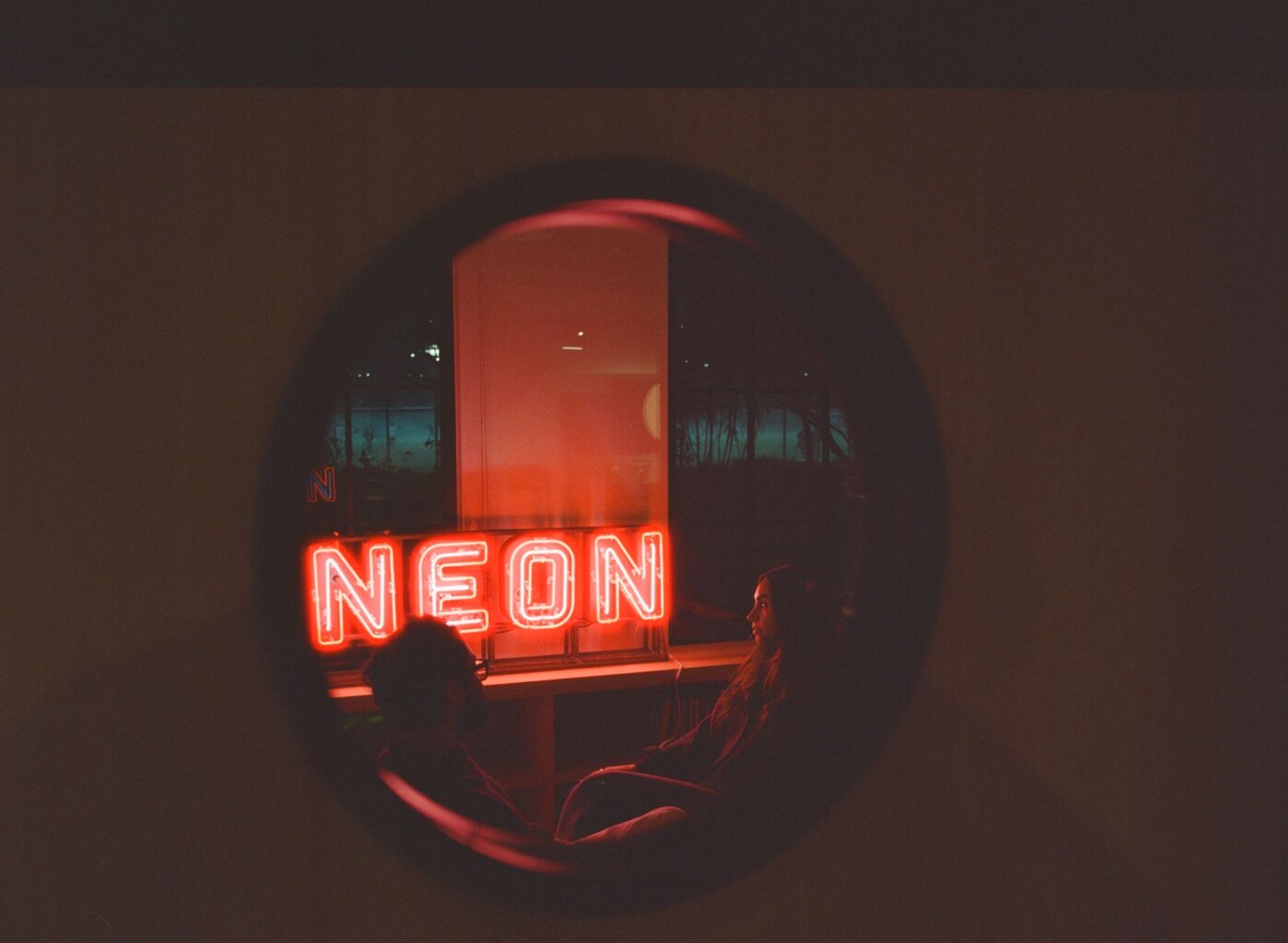
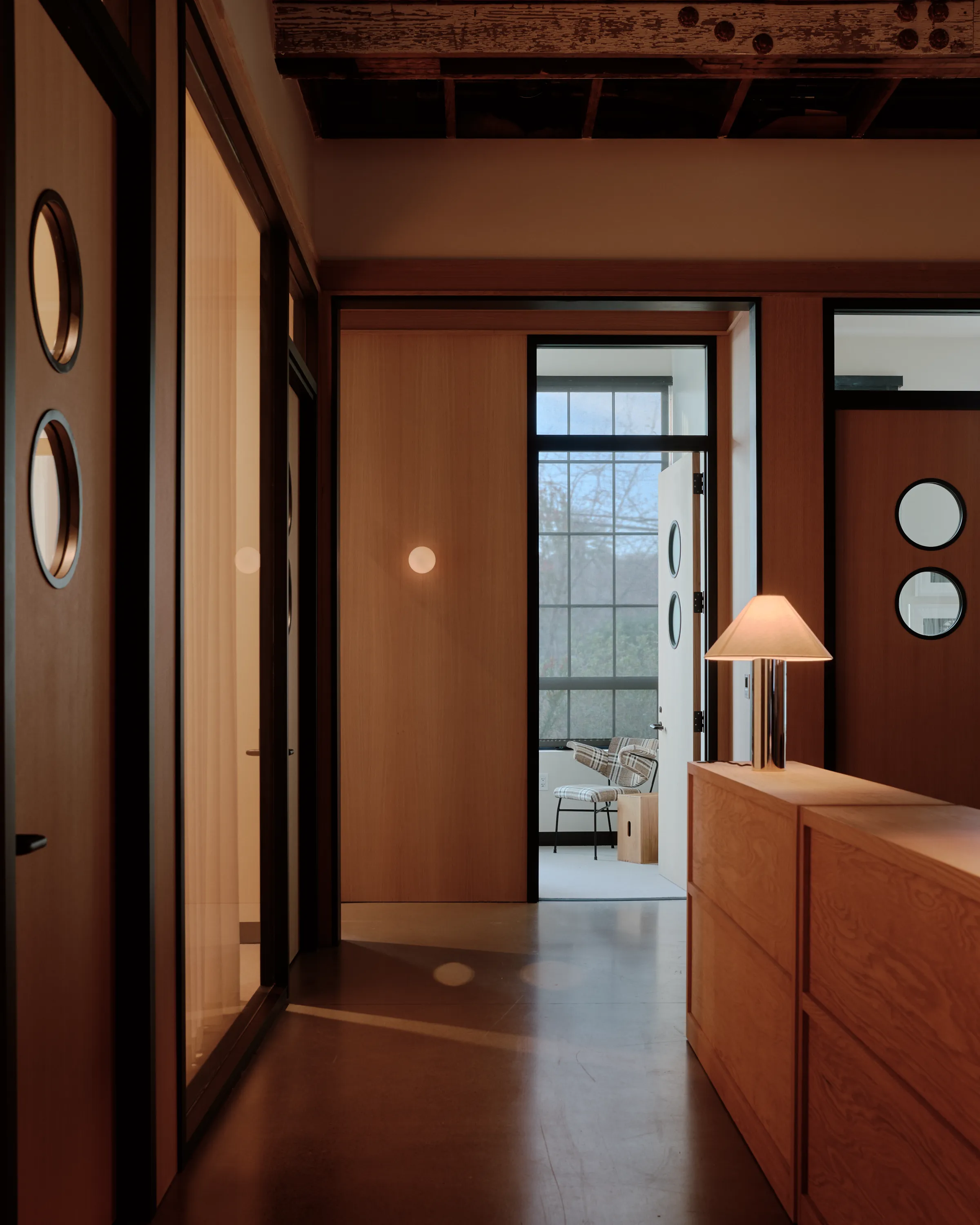
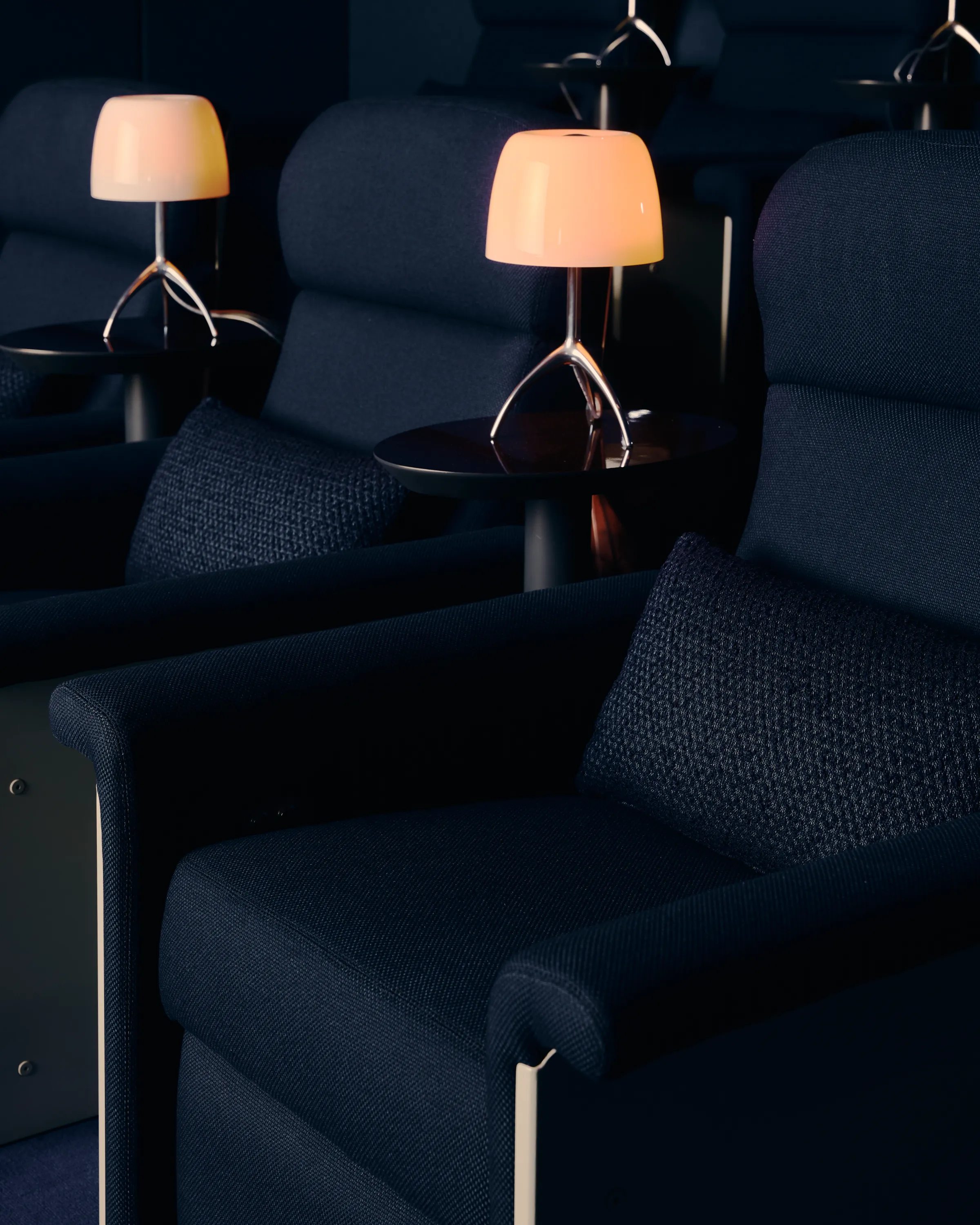
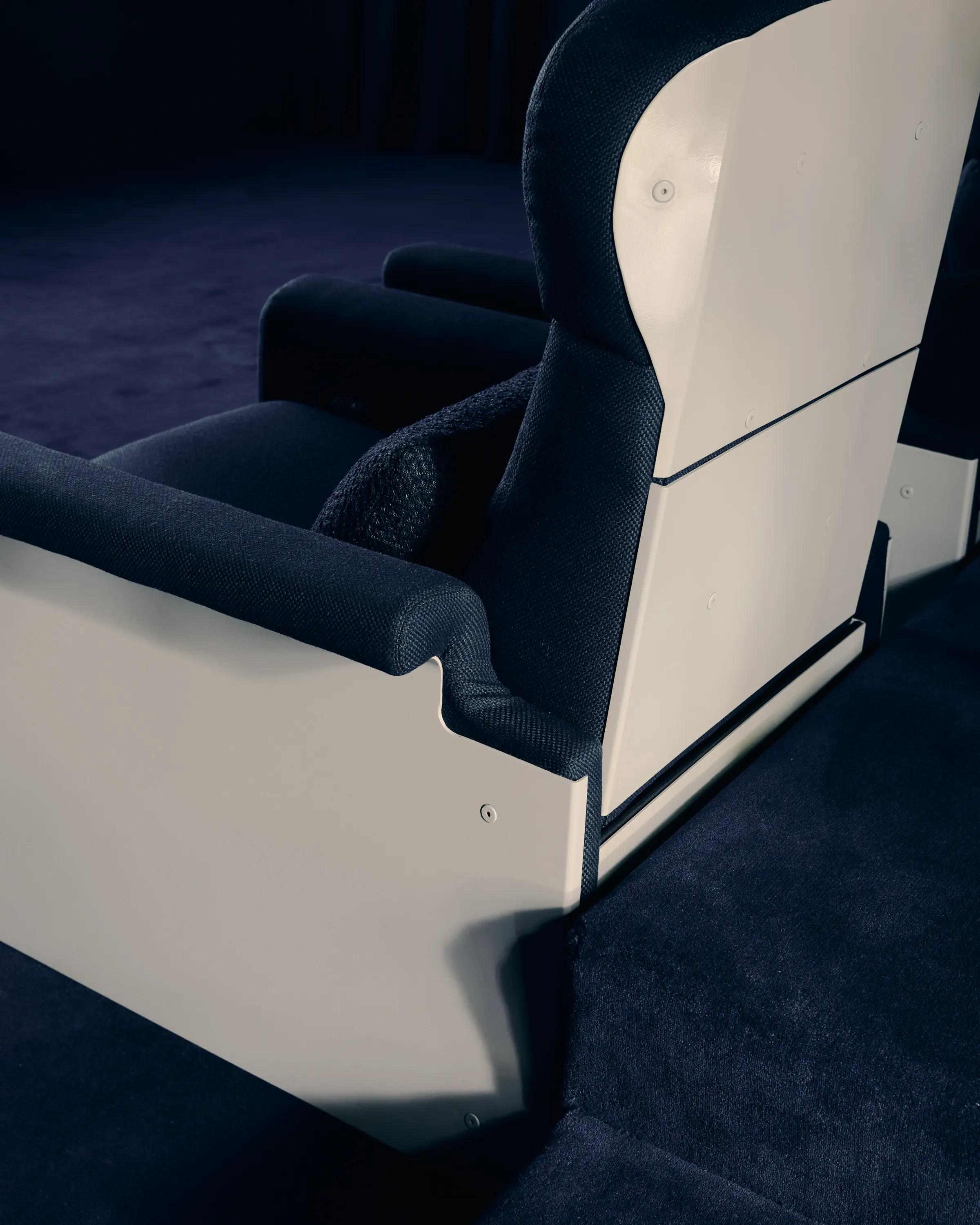
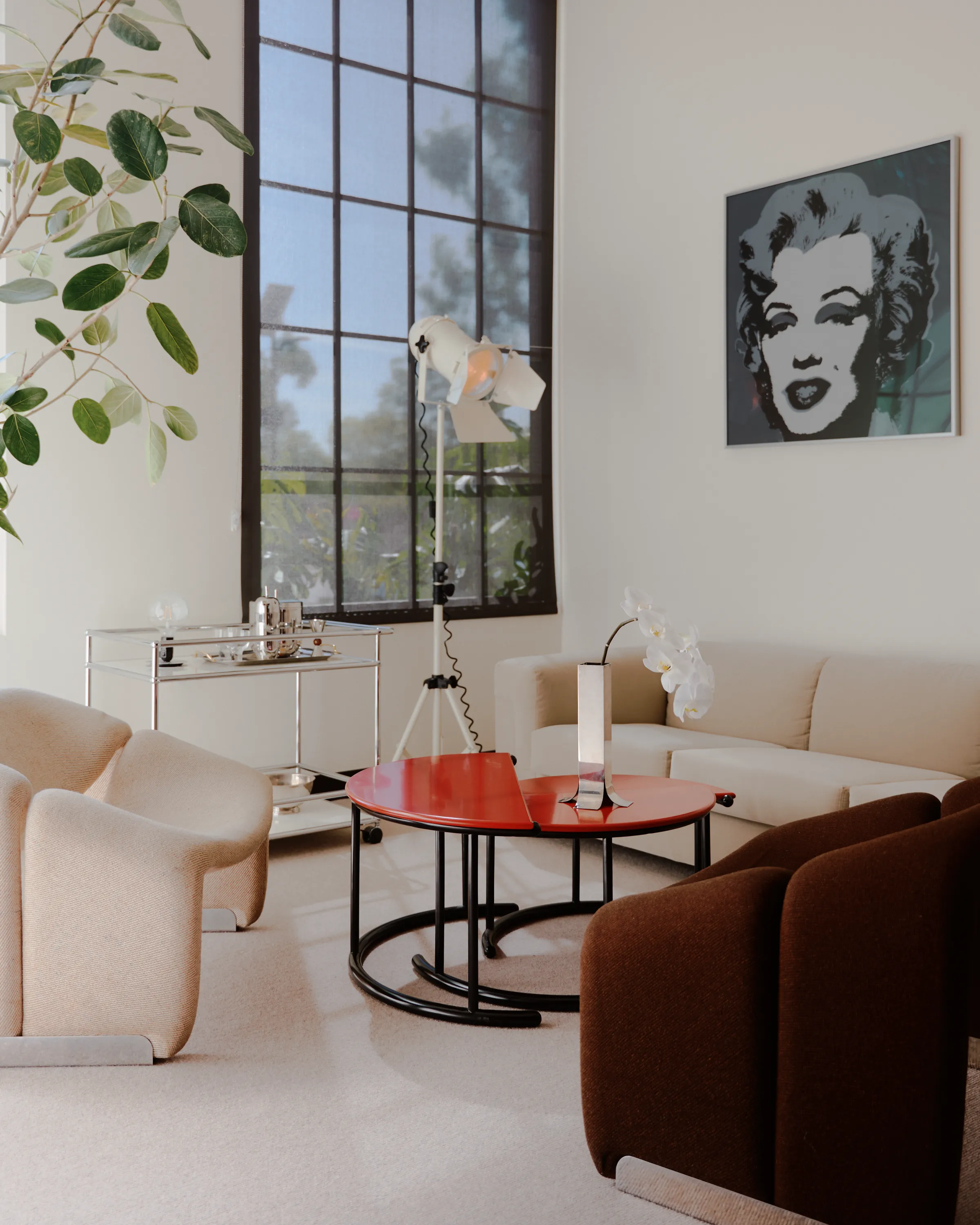
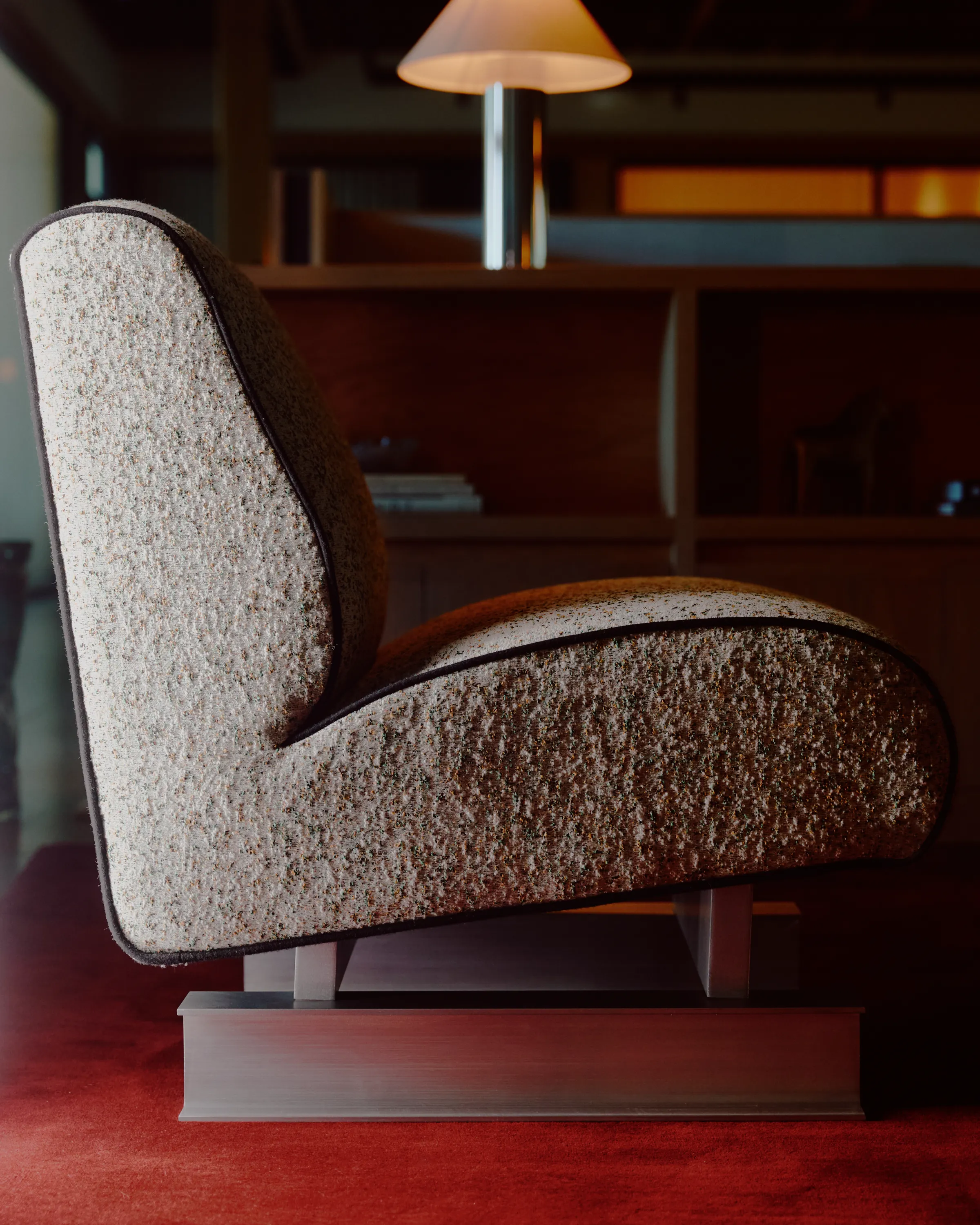
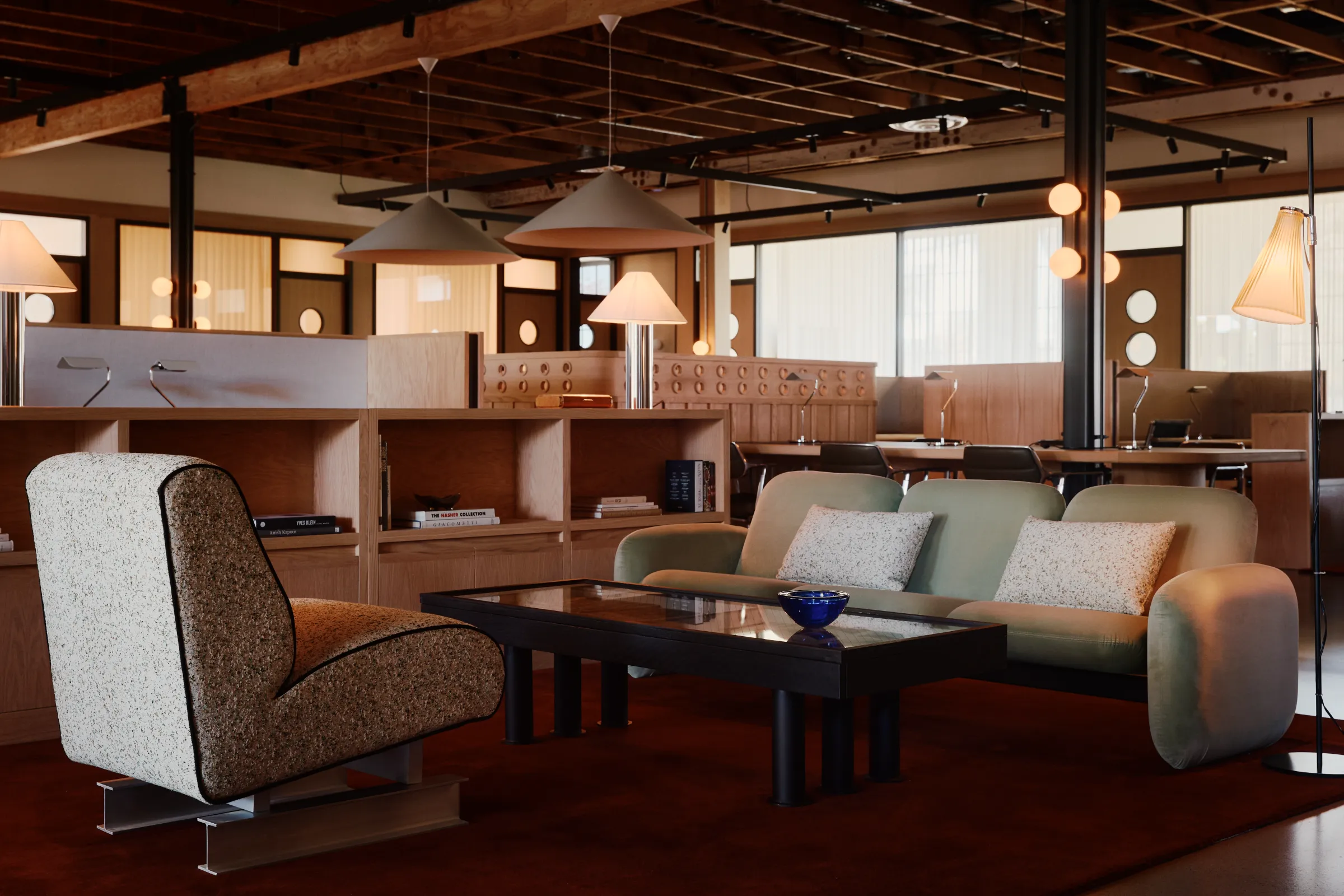
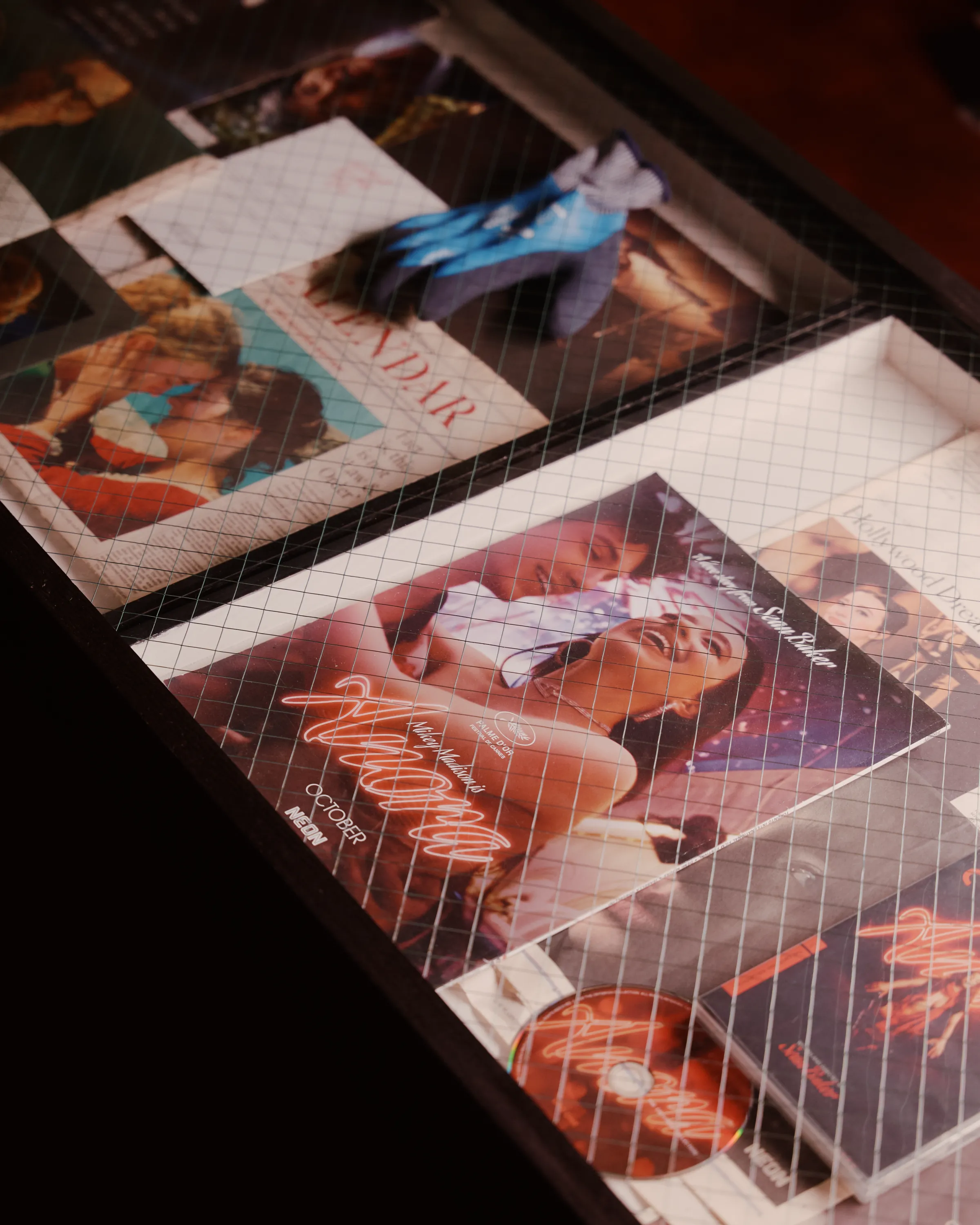
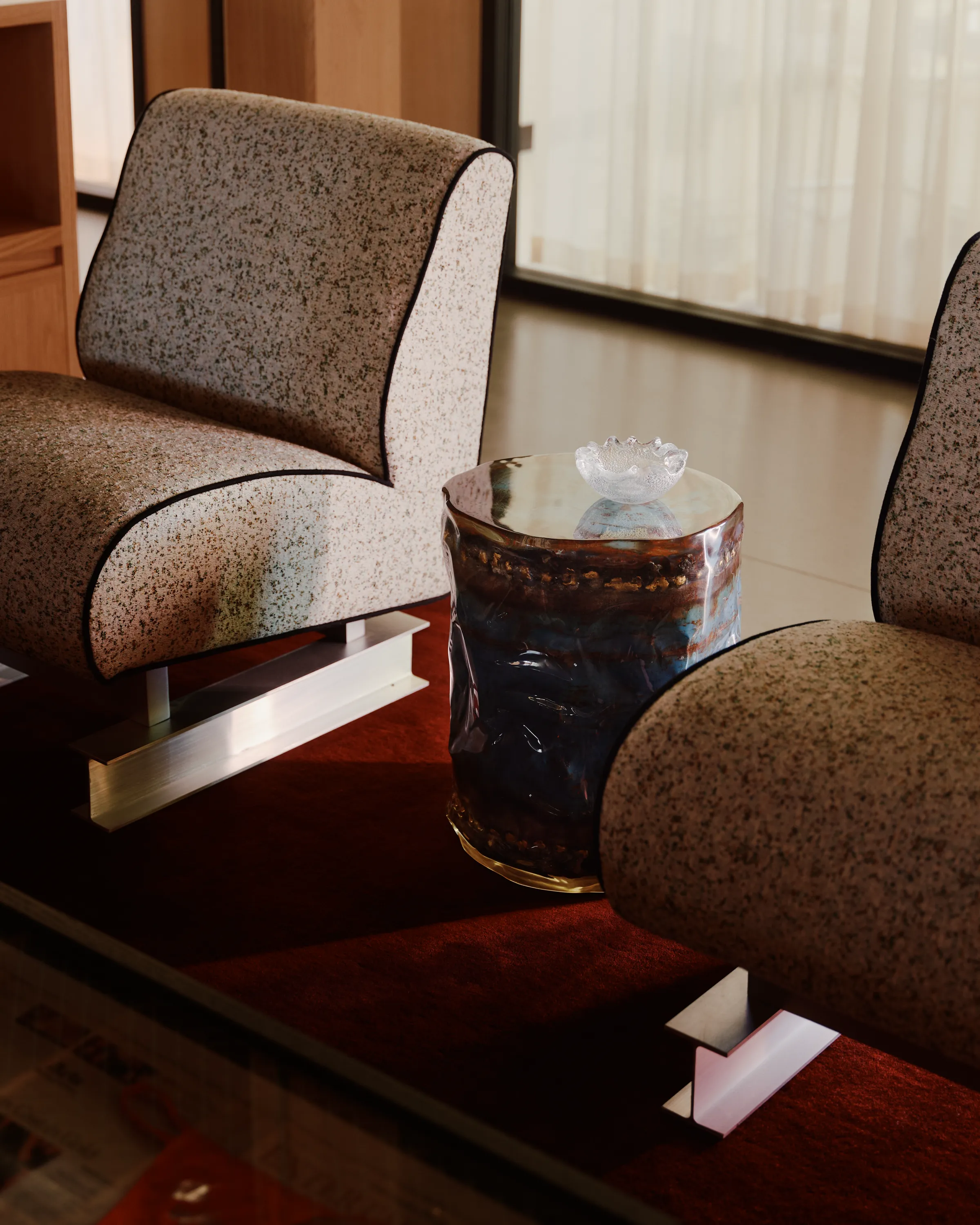
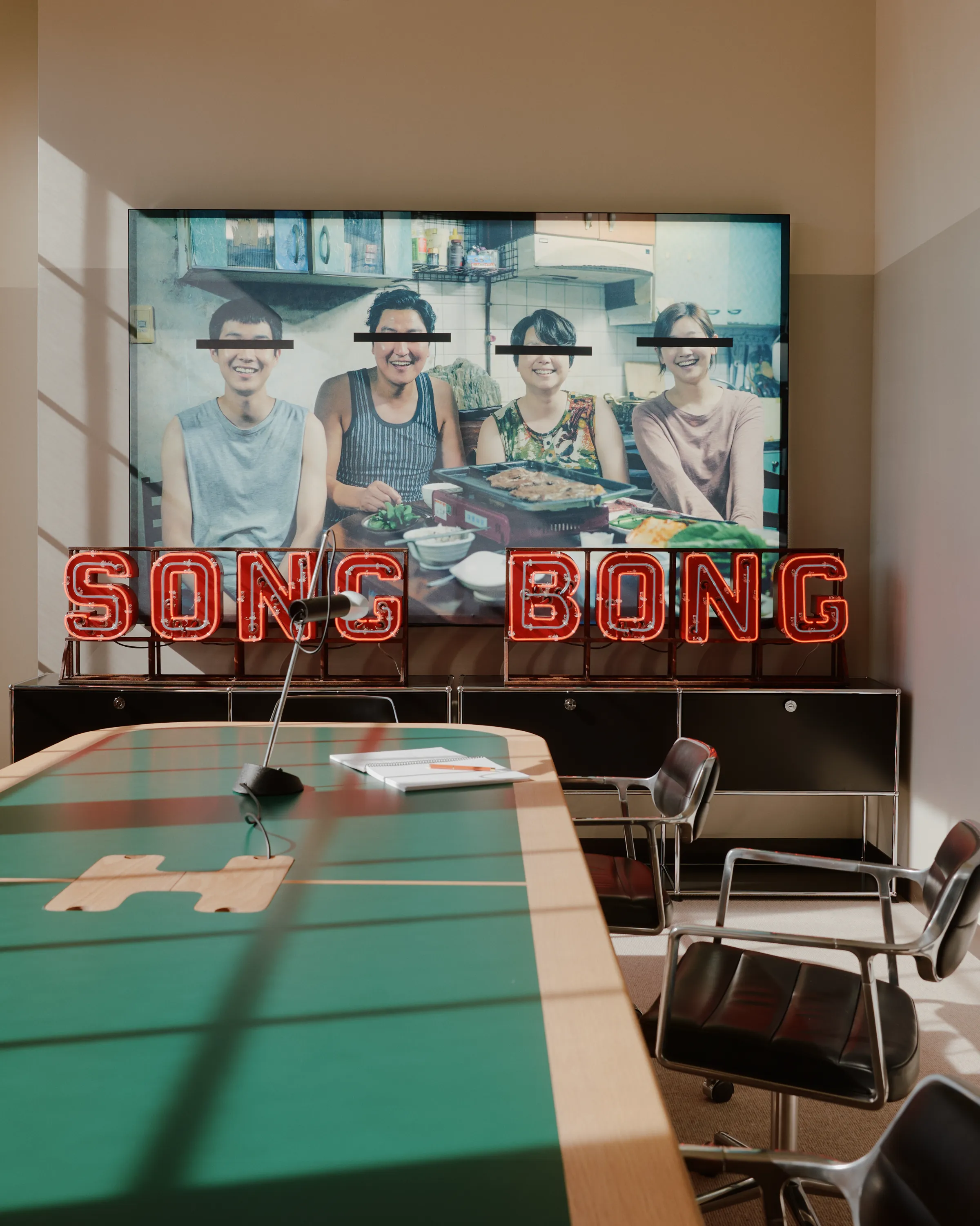
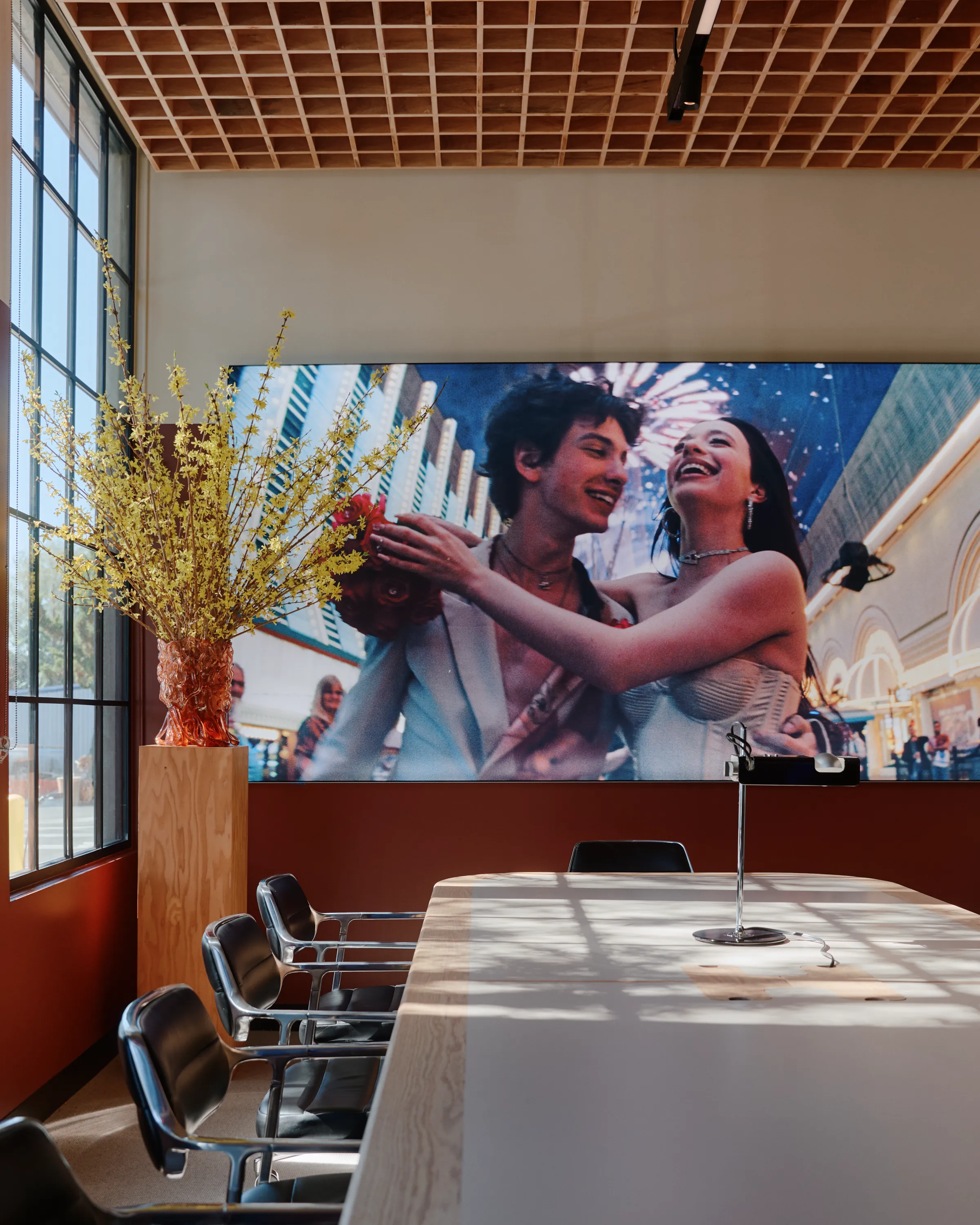
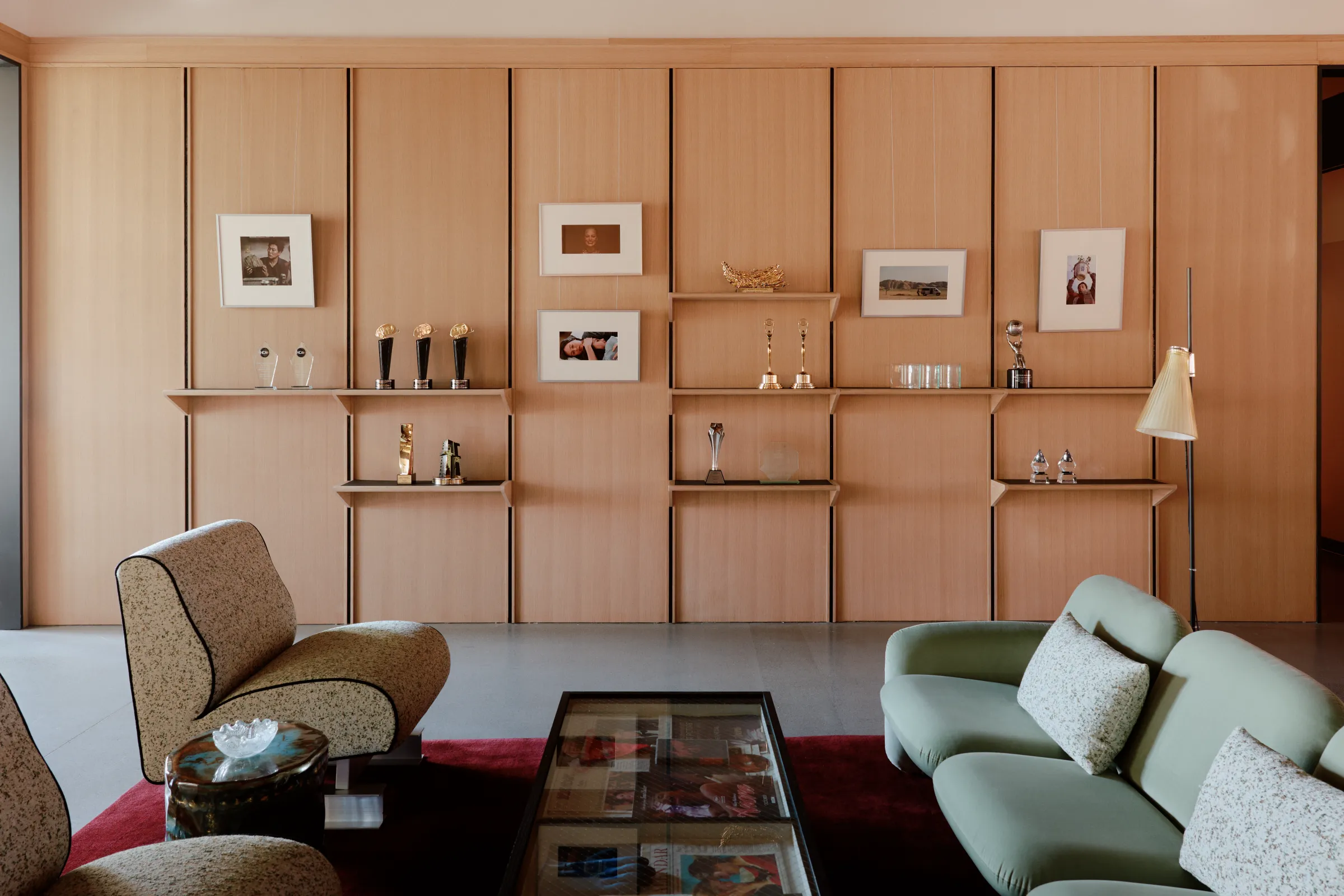
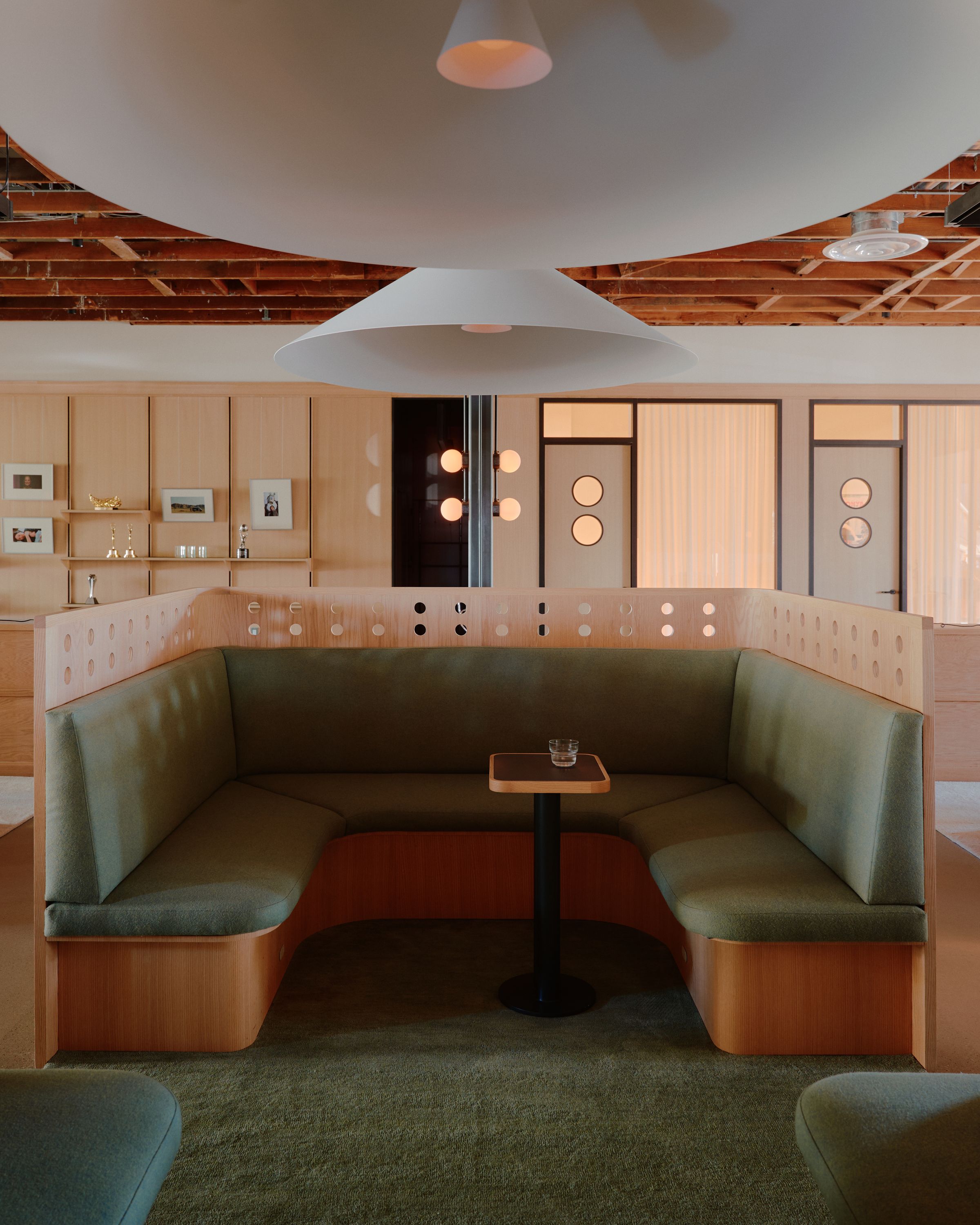
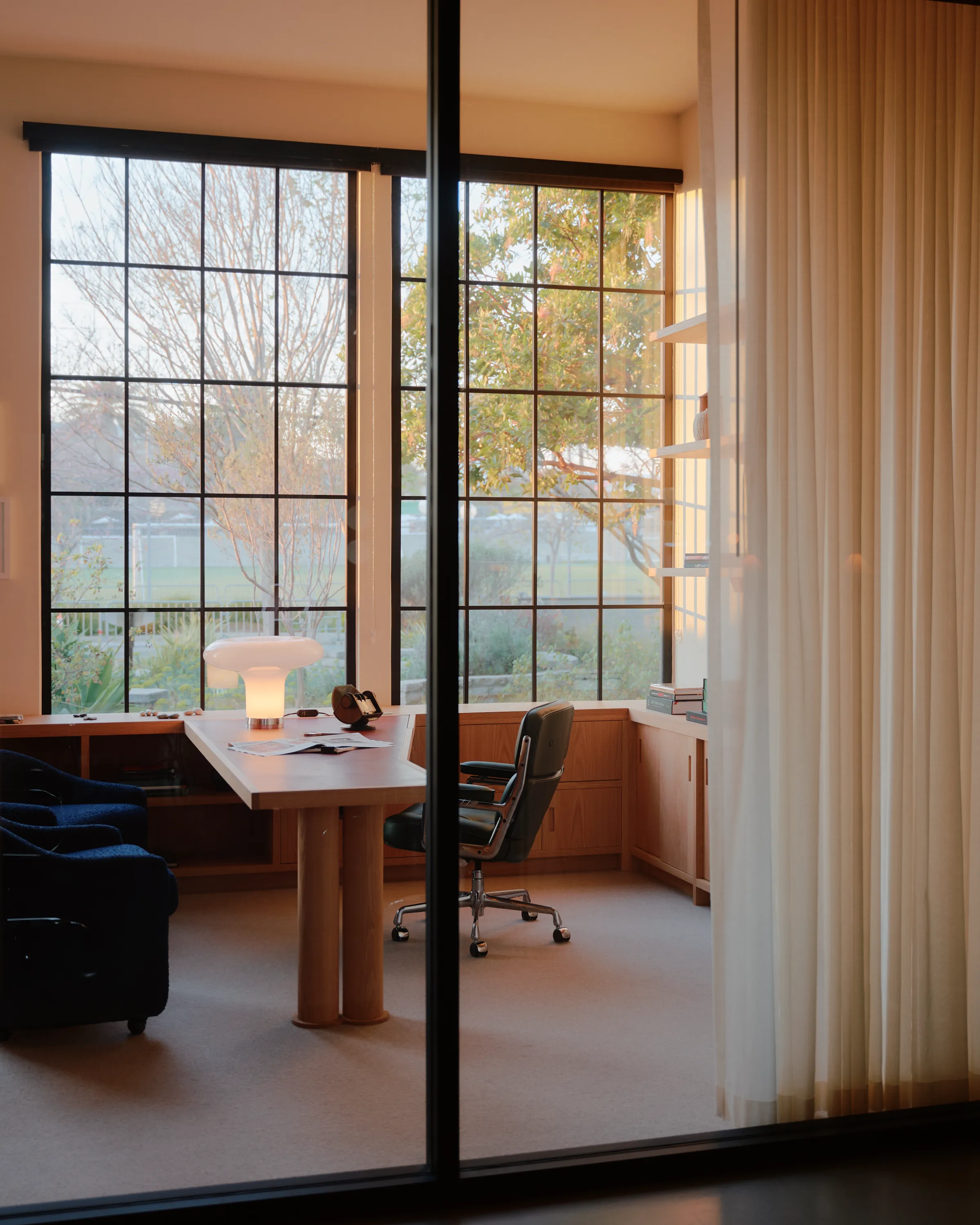
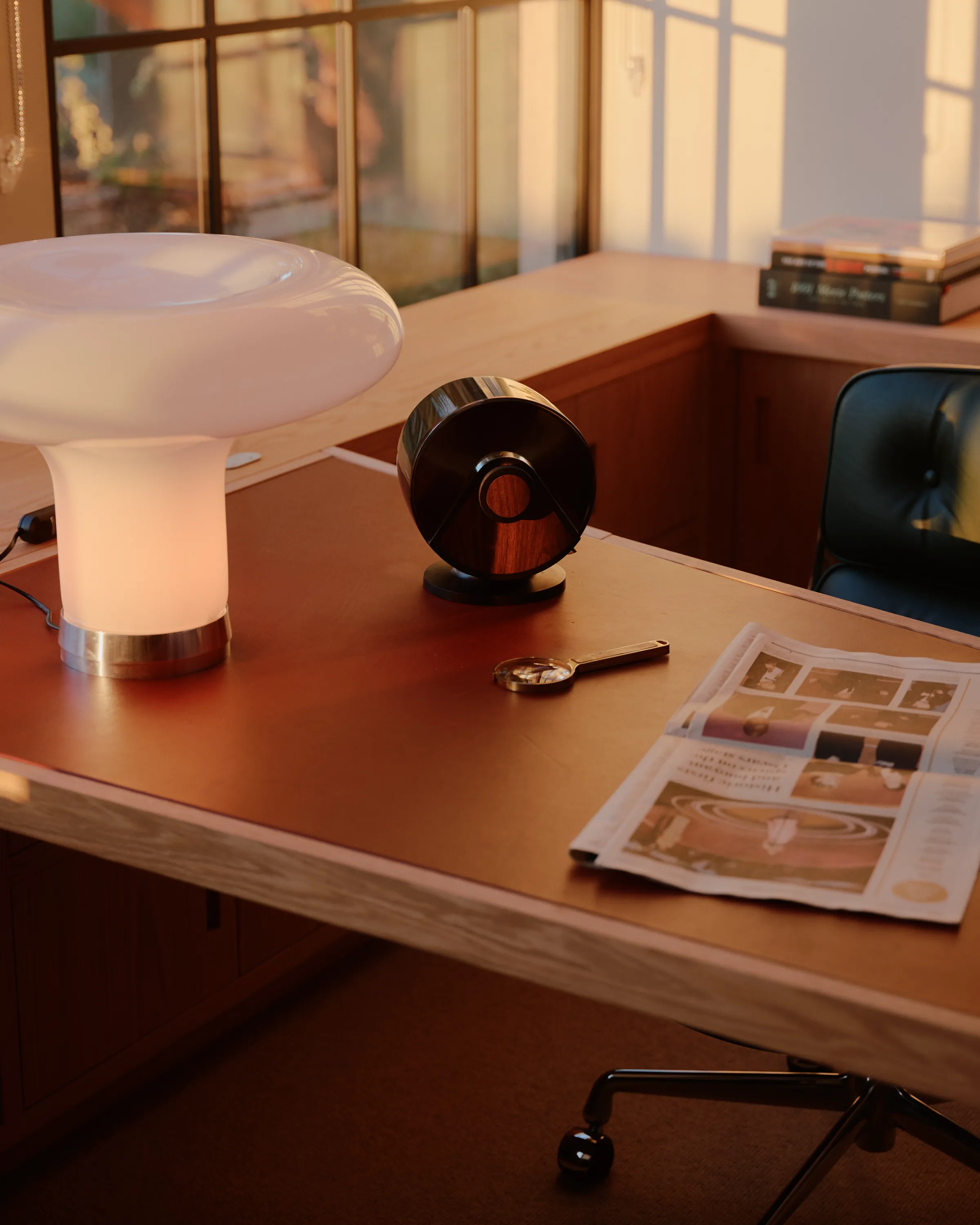
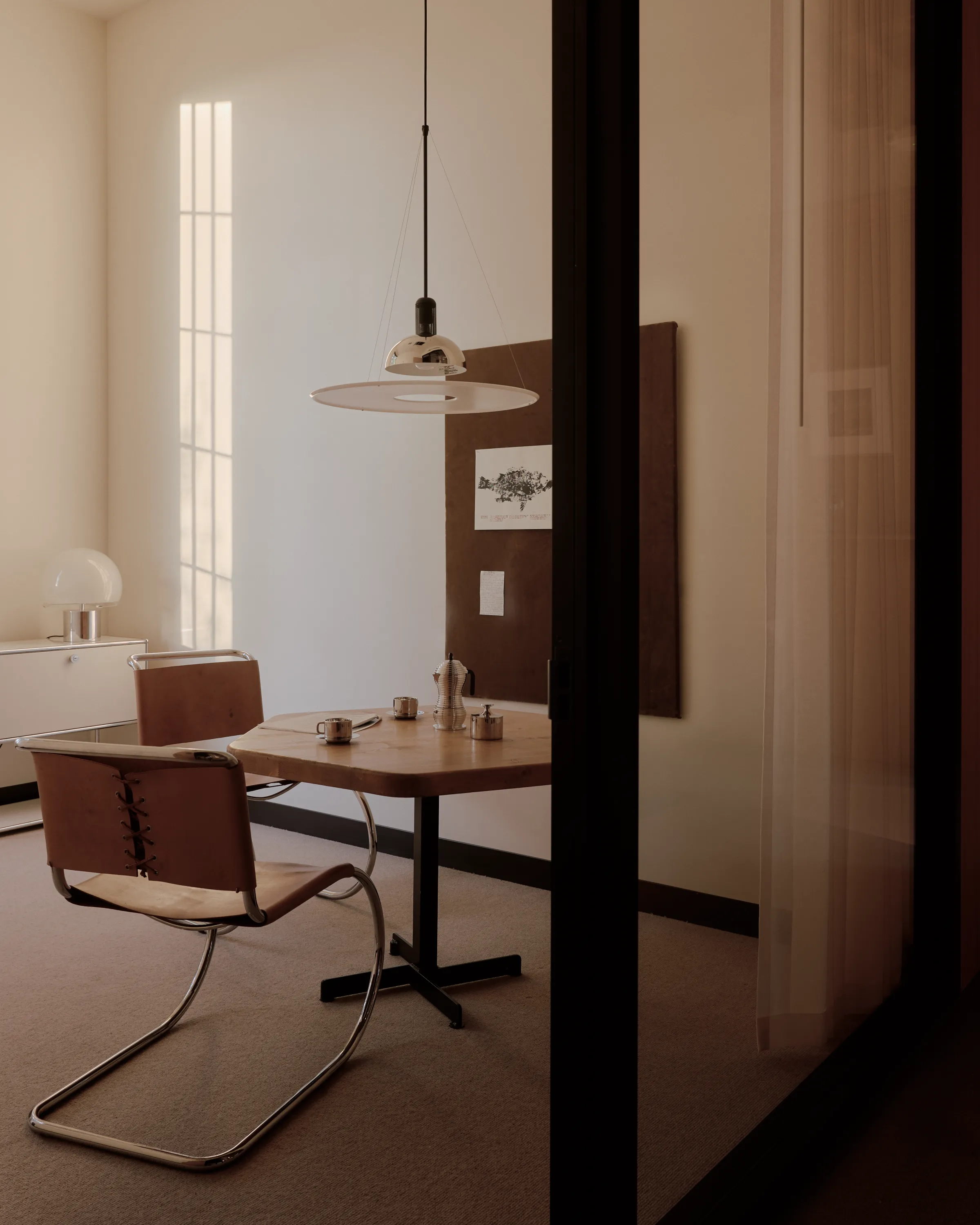
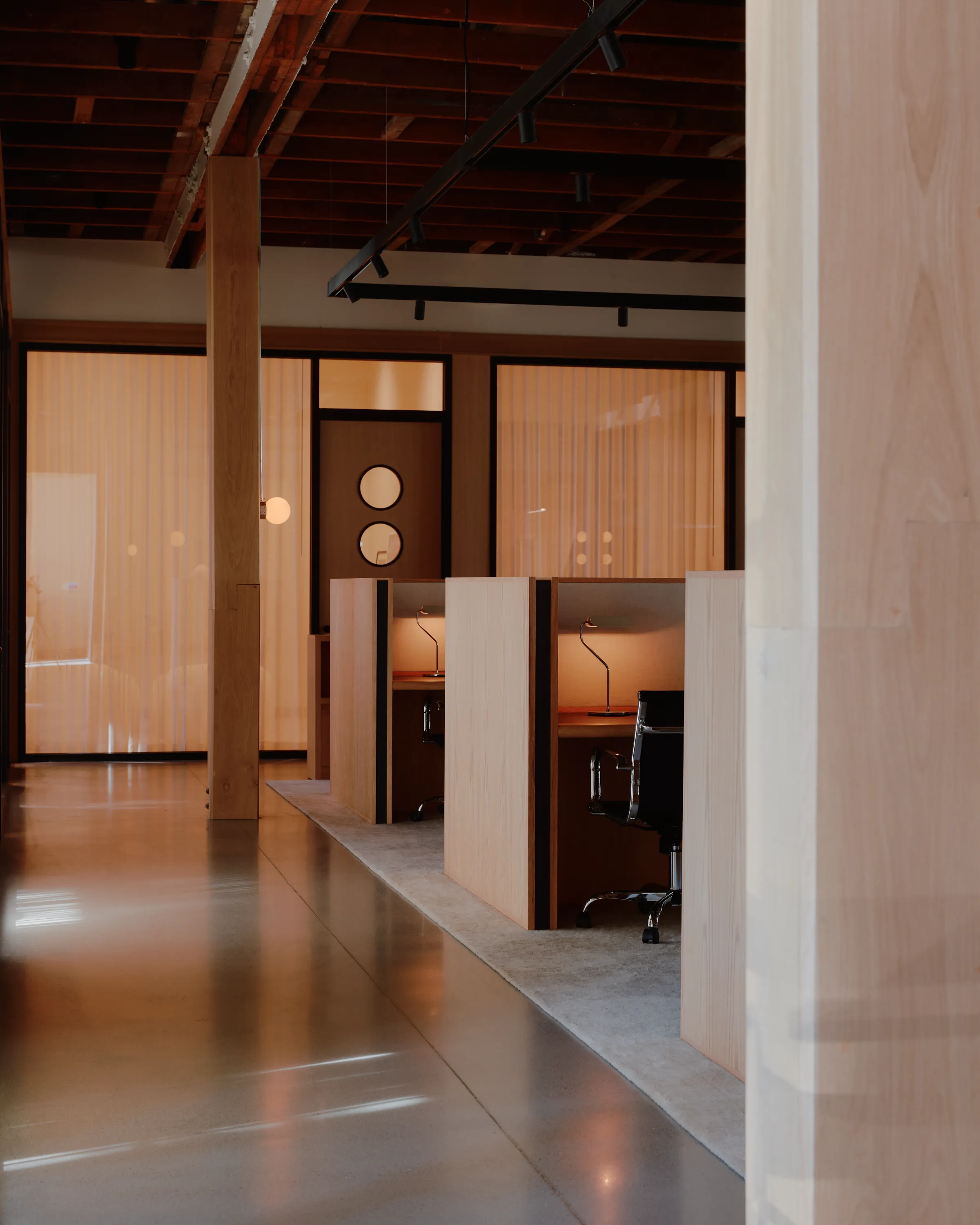
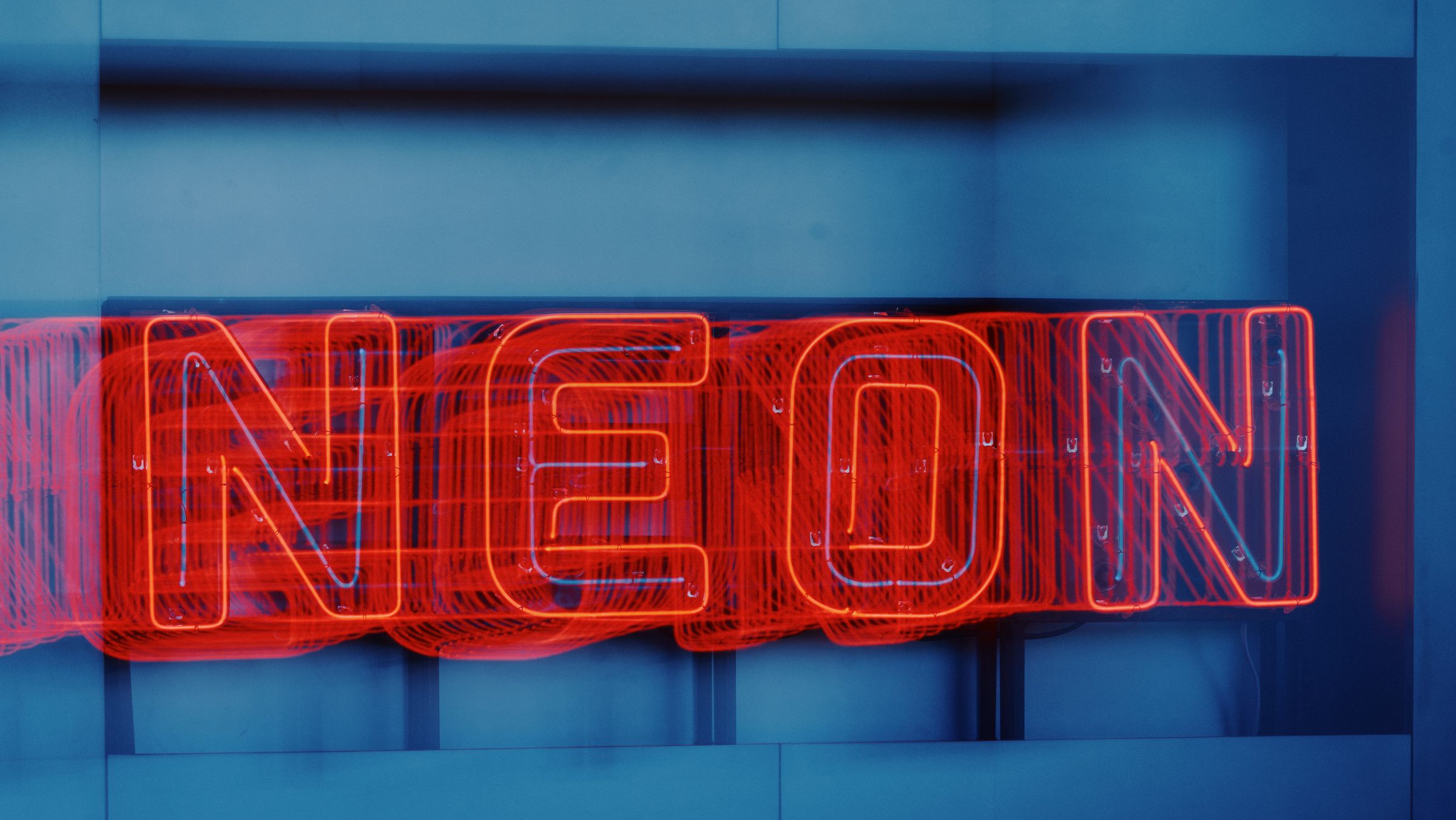
Cinema has the ability to shift culture. Through films that are singular, provocative, and emotionally charged, NEON has reestablished the power of independent cinema. The question is not what these films are, but how they are made and what kind of environment allows them to exist. We design for the cinephile. Not the casual viewer, but the obsessive. The one who understands cinema as history, language, and instrument. We reject the office as neutral container. We reject decoration as substitute for meaning. The project is conceived as infrastructure: a disciplined framework for thinking, editing, producing. What exists here is not representation, but potential. Nothing arbitrary. Everything intentional.
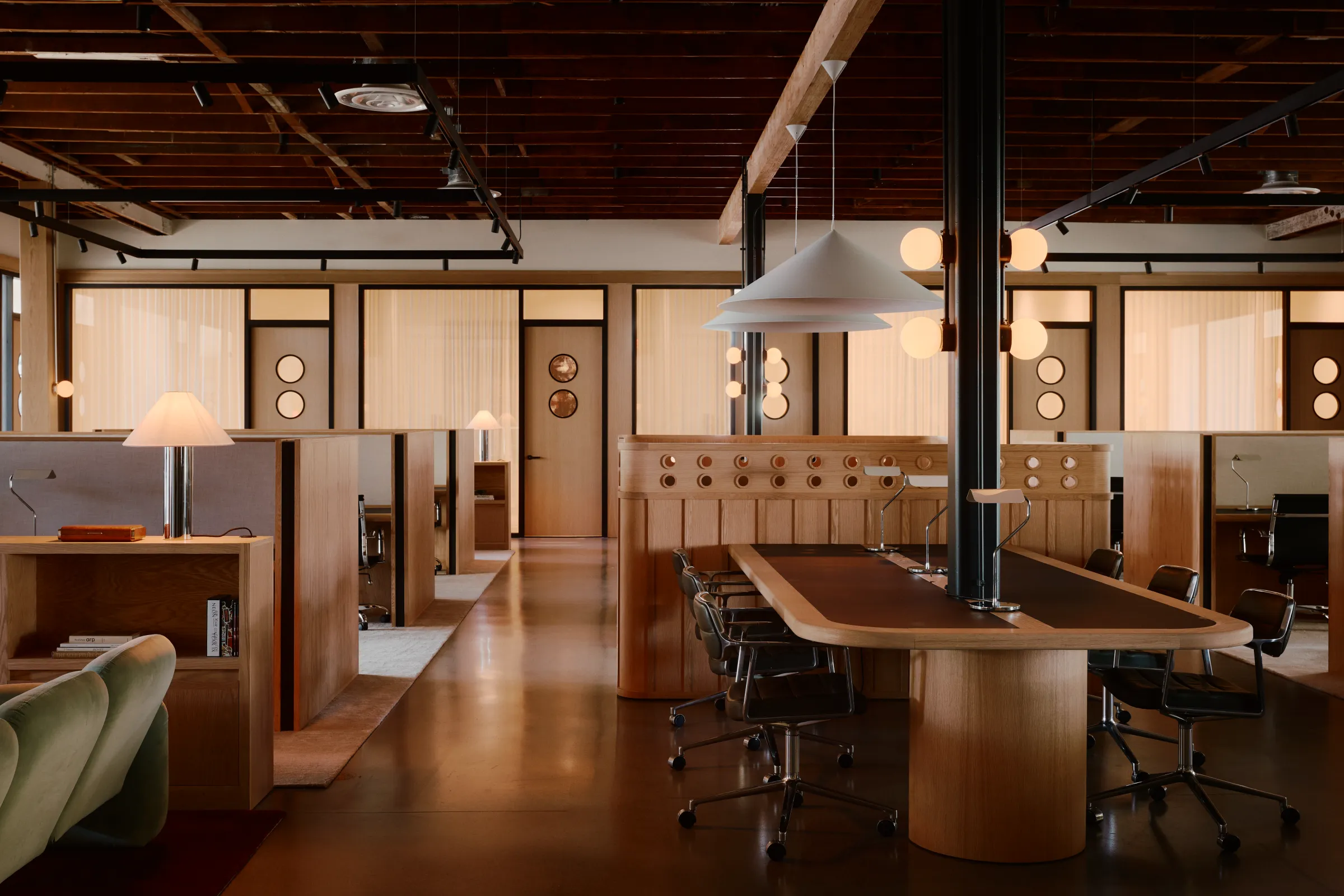
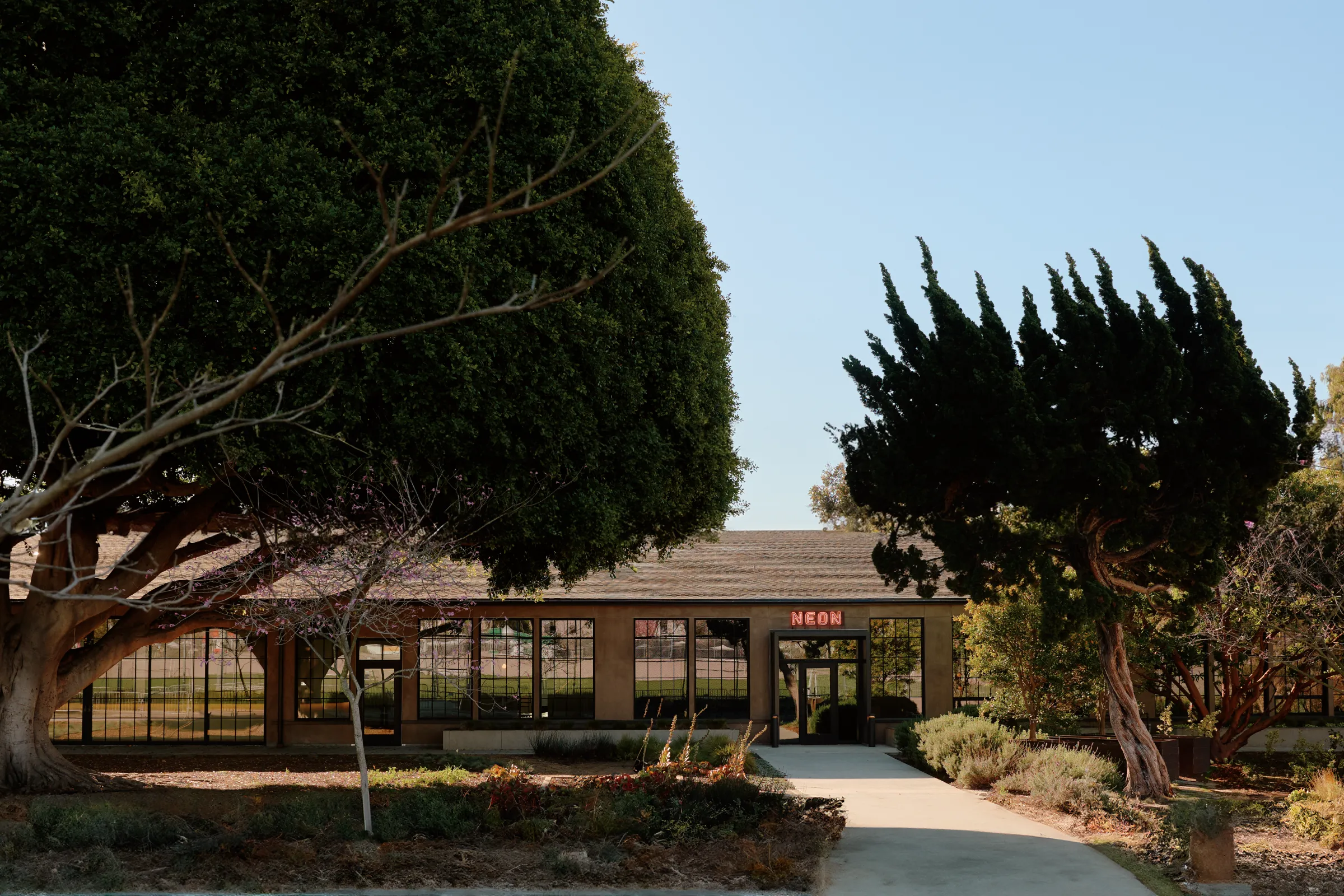
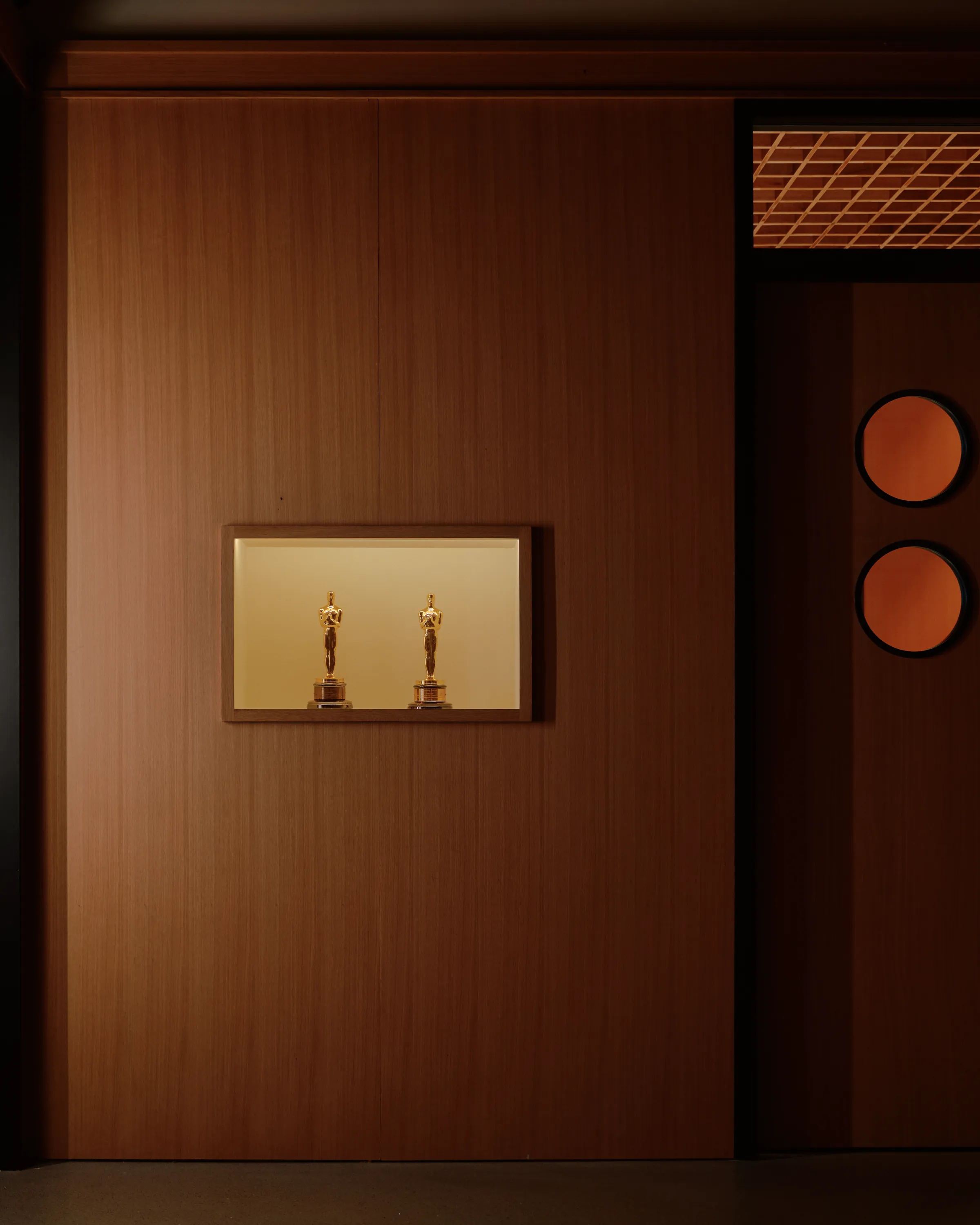
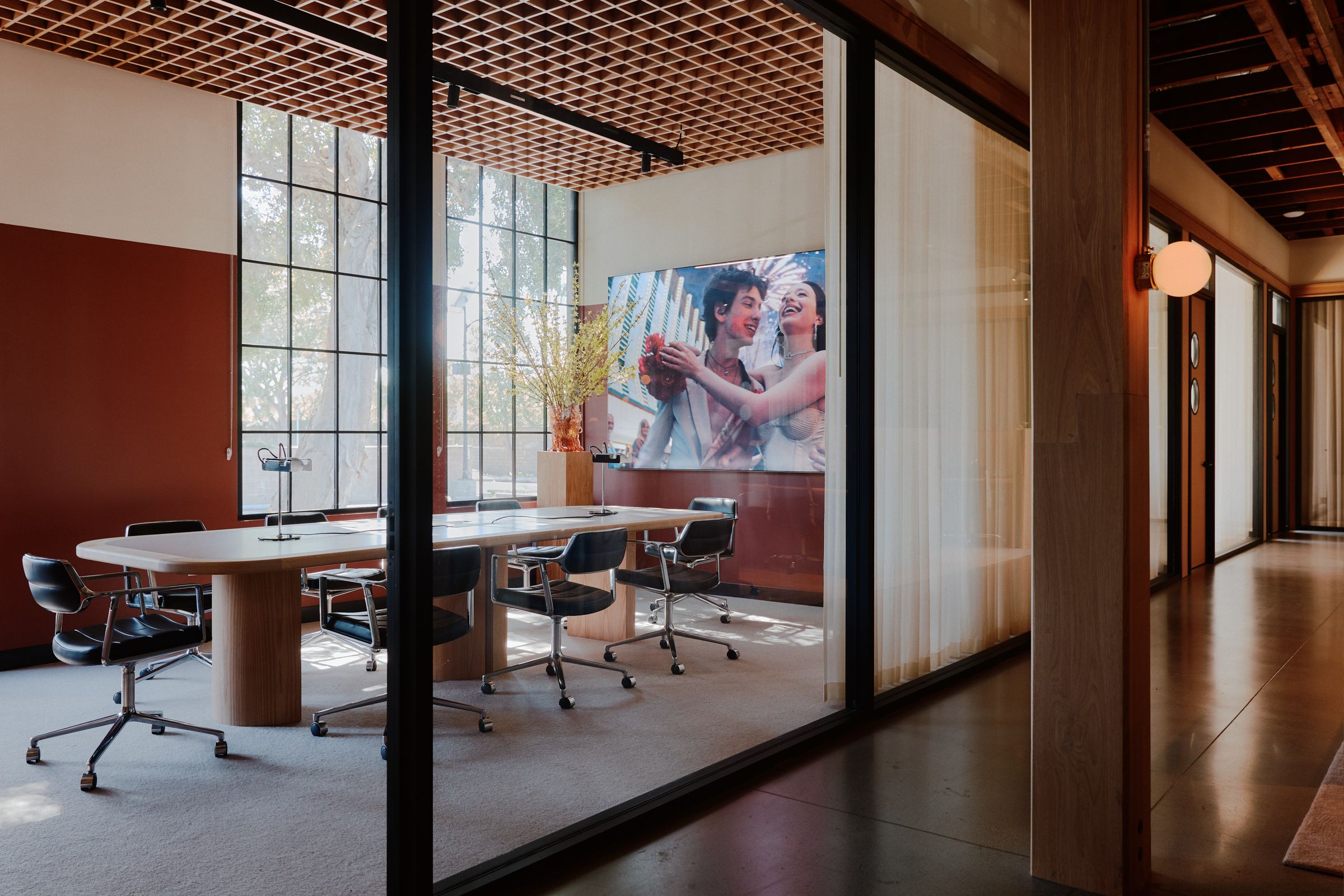
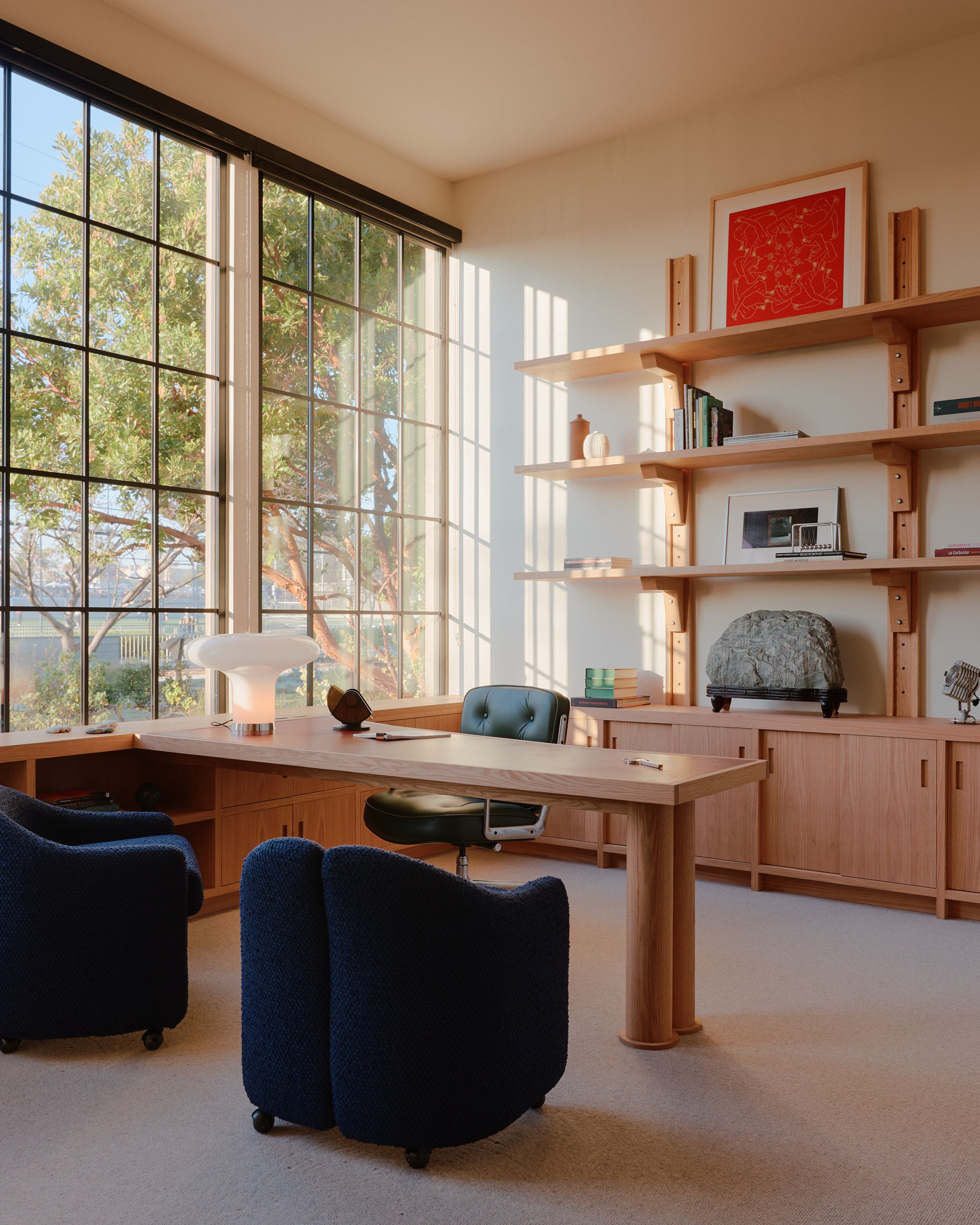
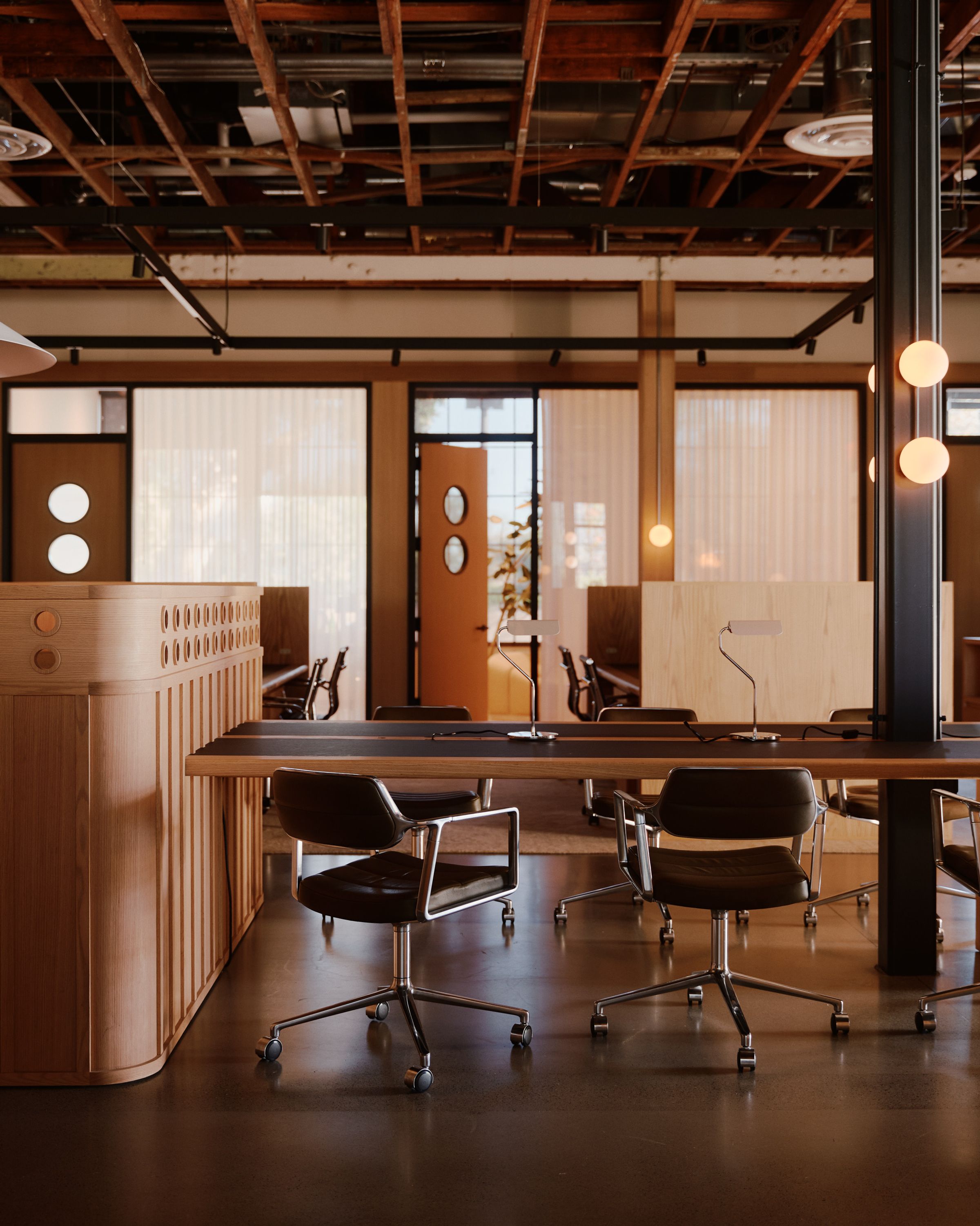
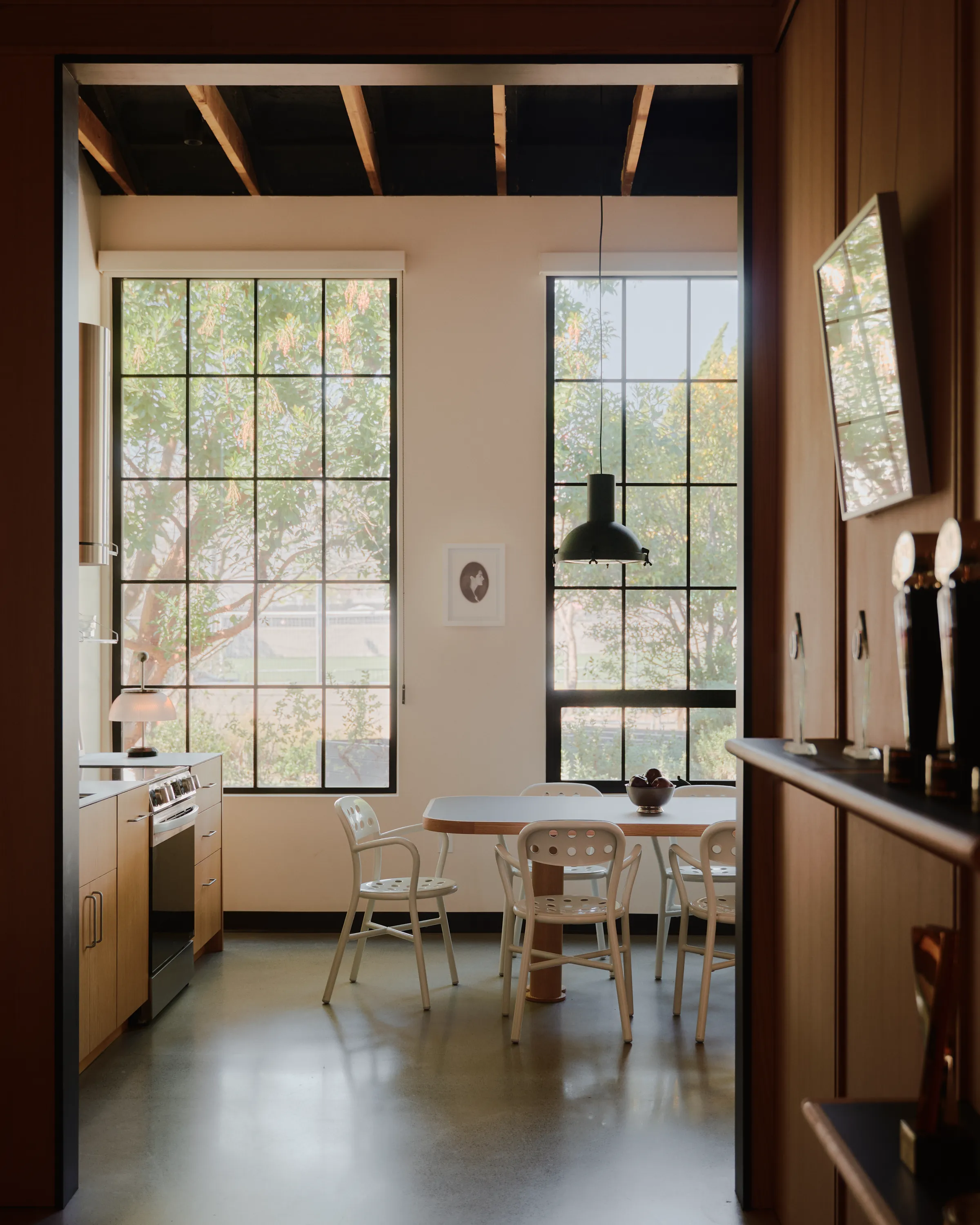
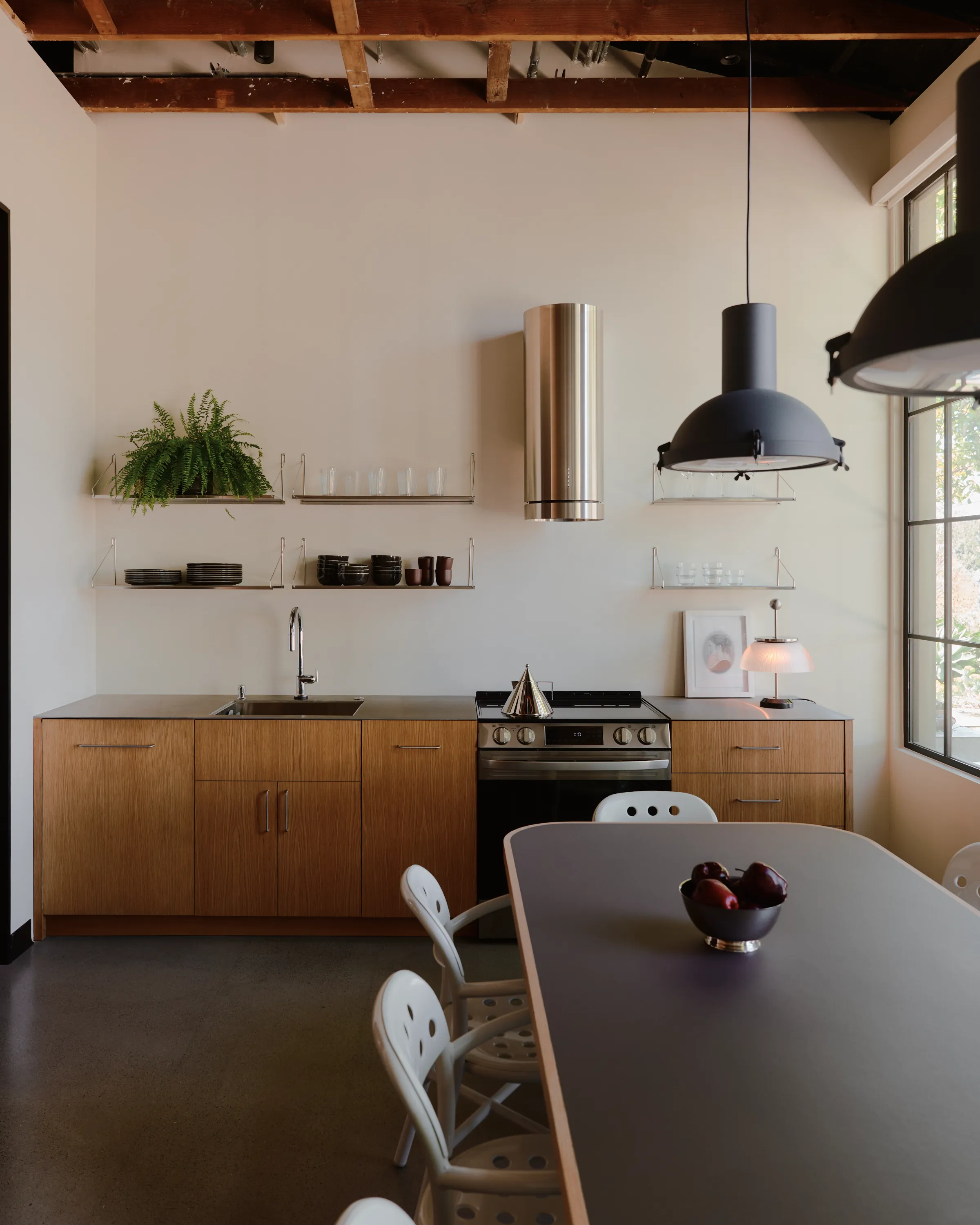
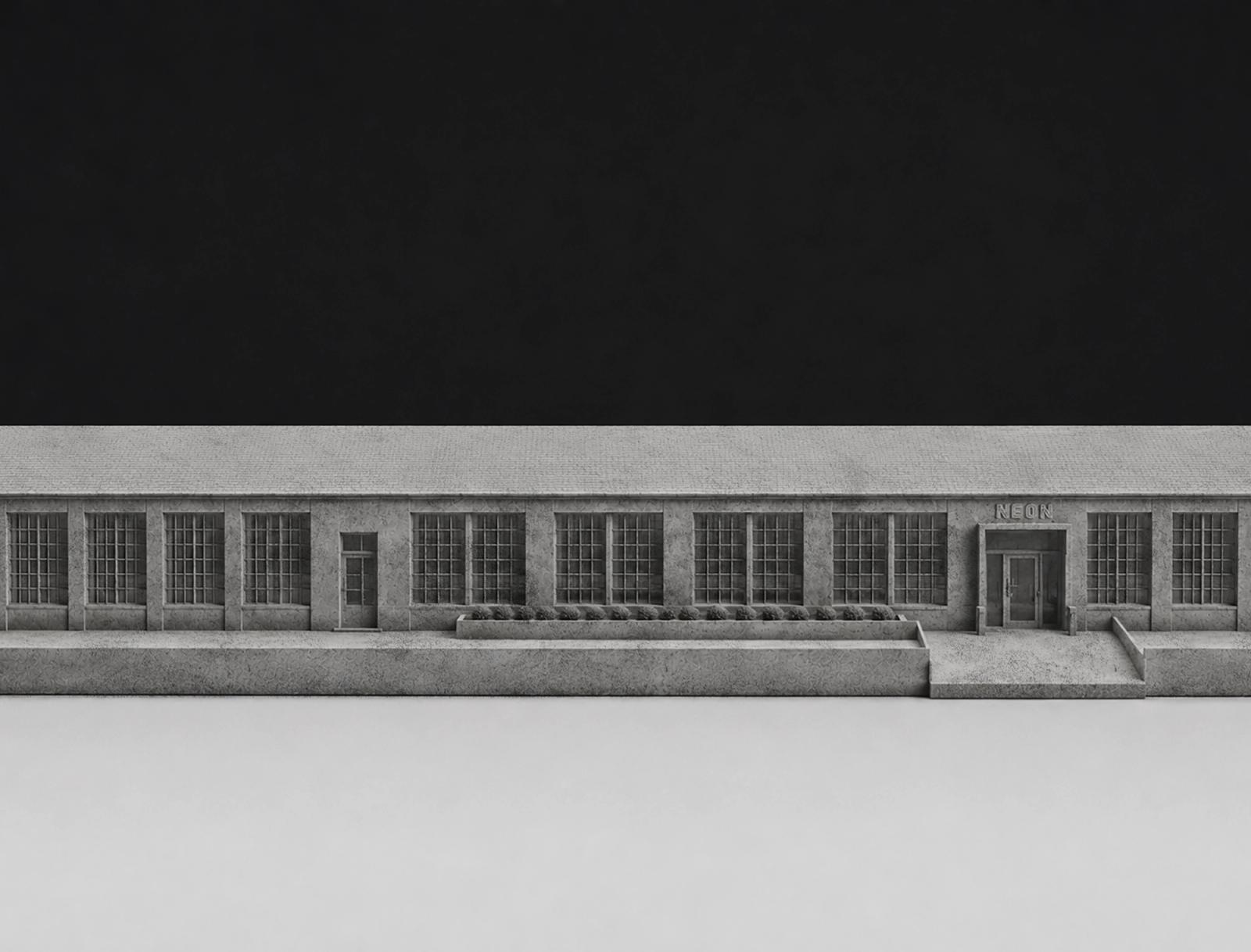
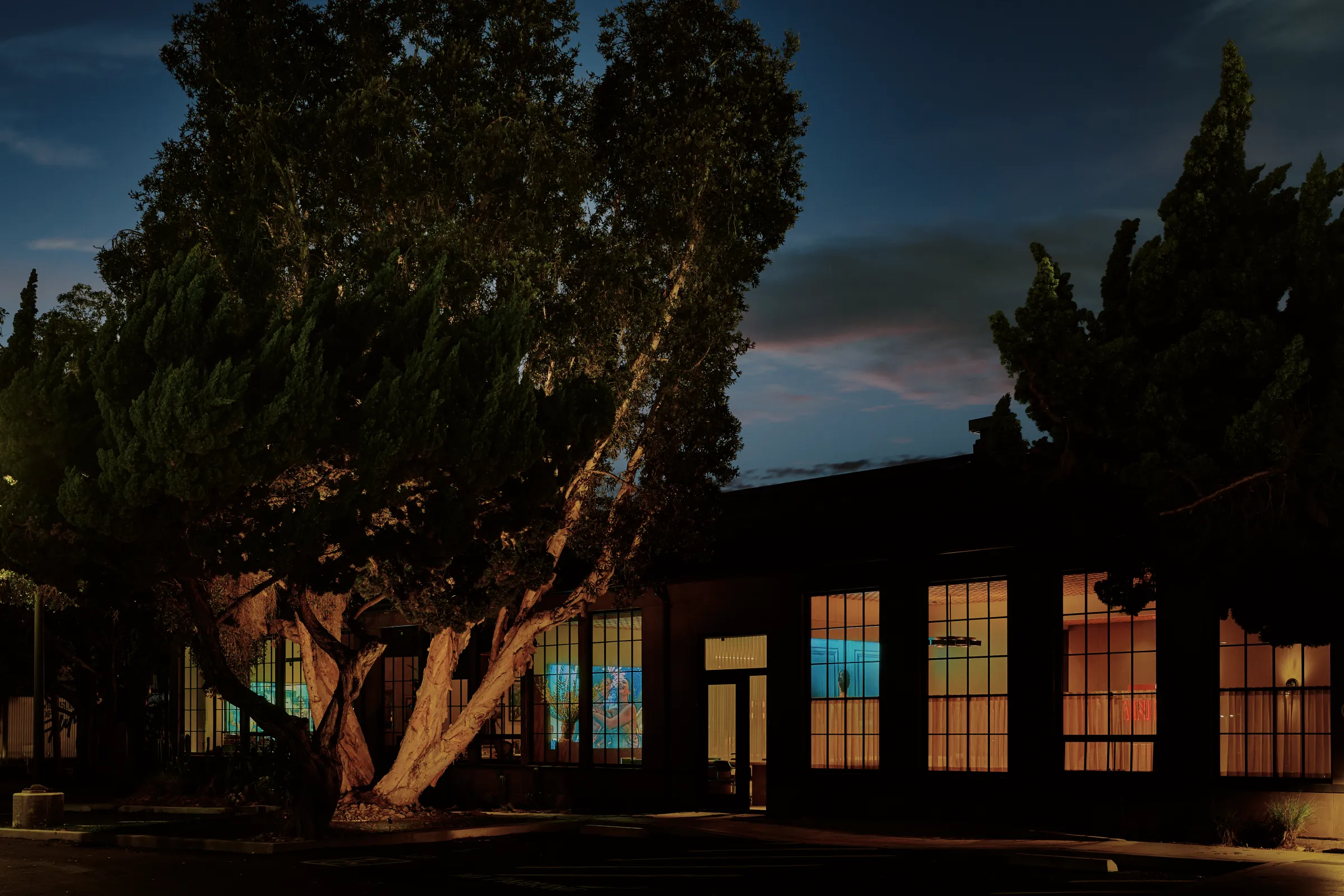
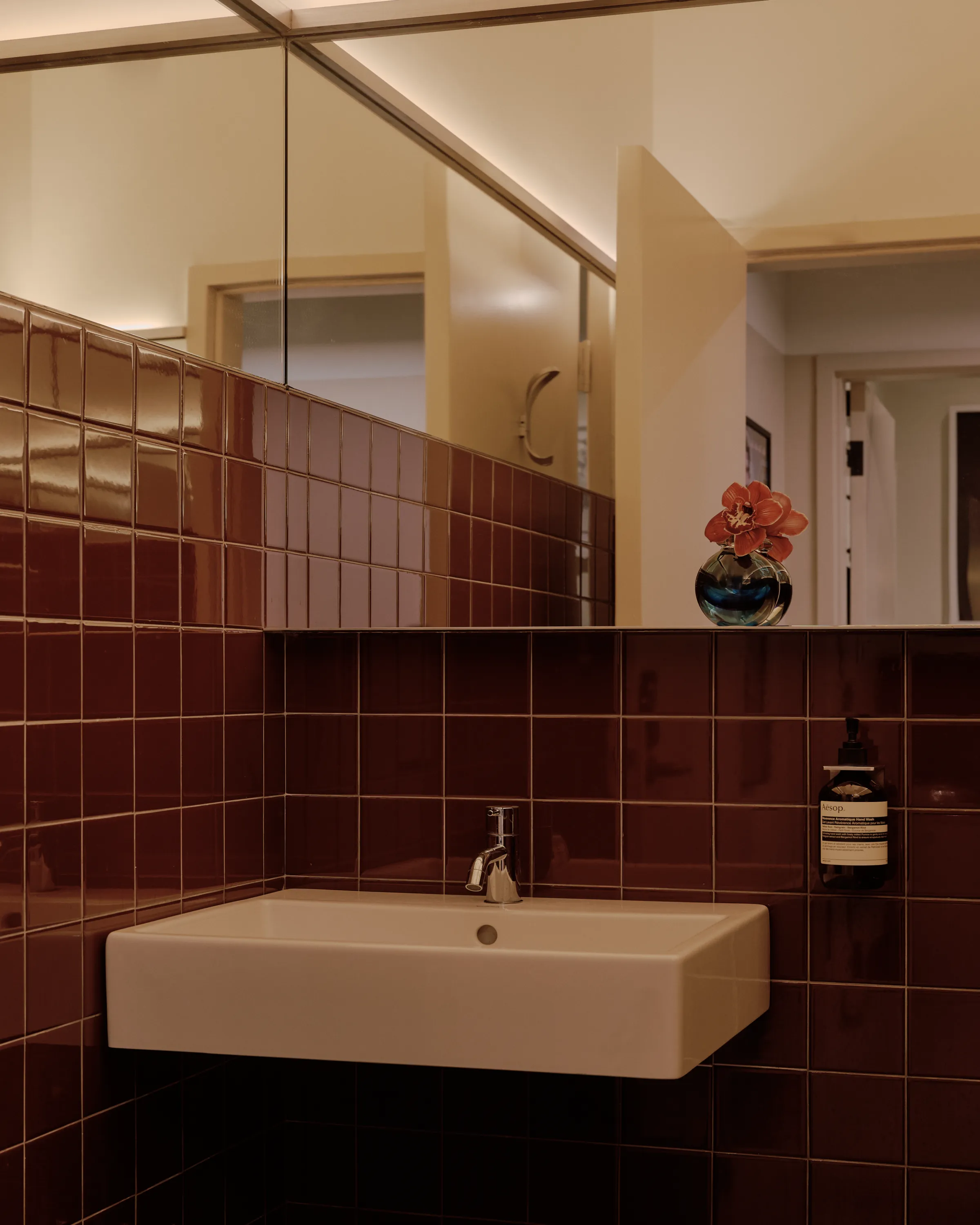
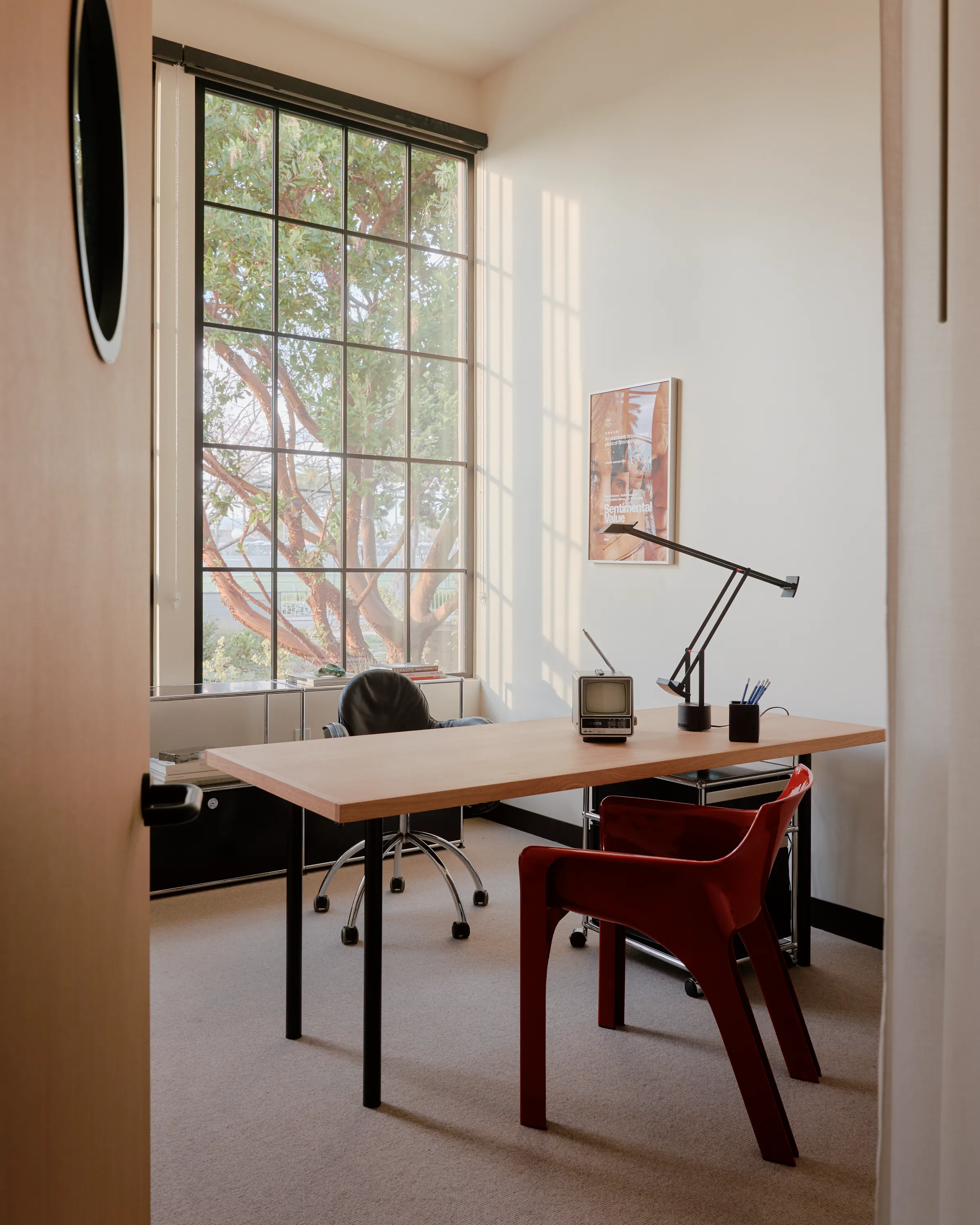
Set within the original 1940s terminal building at the Santa Monica Airport, once the administrative and aircraft maintenance hub of one of America’s oldest aviation sites, historically known as Clover Field, MUKA’s design for the independent film company NEON Rated transforms a deeply storied structure into a forward-looking cultural engine. The project begins with a rejection: the conventional office is no longer a viable model for cultural production. Responding to both the site’s legacy of production and its future as a public-facing civic landscape, the project reimagines the office as a disciplined yet atmospheric framework for cinephiles and idea-driven creators, those who engage film not as entertainment, but as language, history, and instrument. Conceived as an intentional sequence of spaces rather than an open plan, the project adopts a cinematic logic, spaces that compress and release, shifting between foreground and backdrop. The design reflects NEON’s role as a cultural provocateur behind Oscar-winning films such as PARASITE and ANORA, creating an environment that anticipates and shapes what comes next.
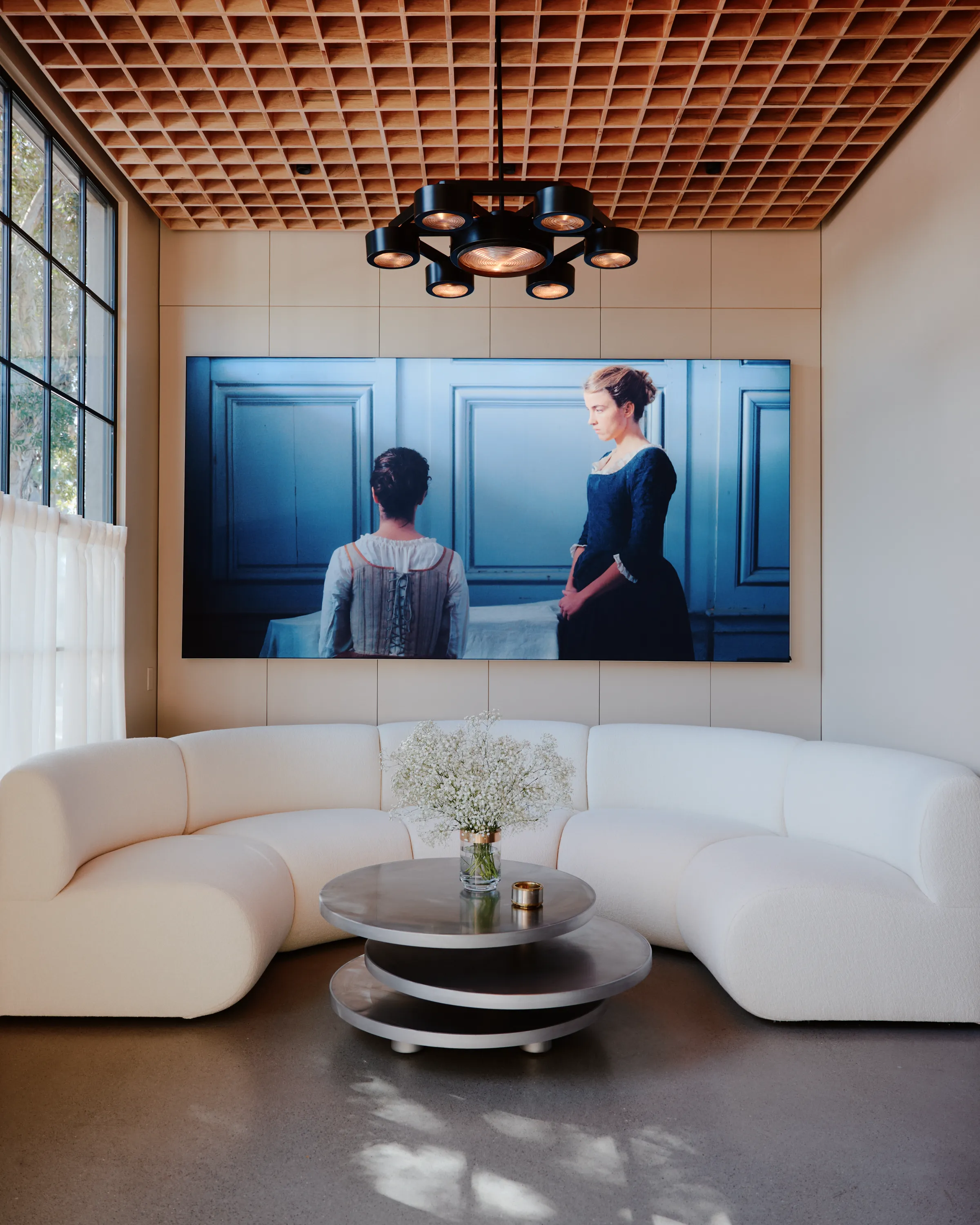
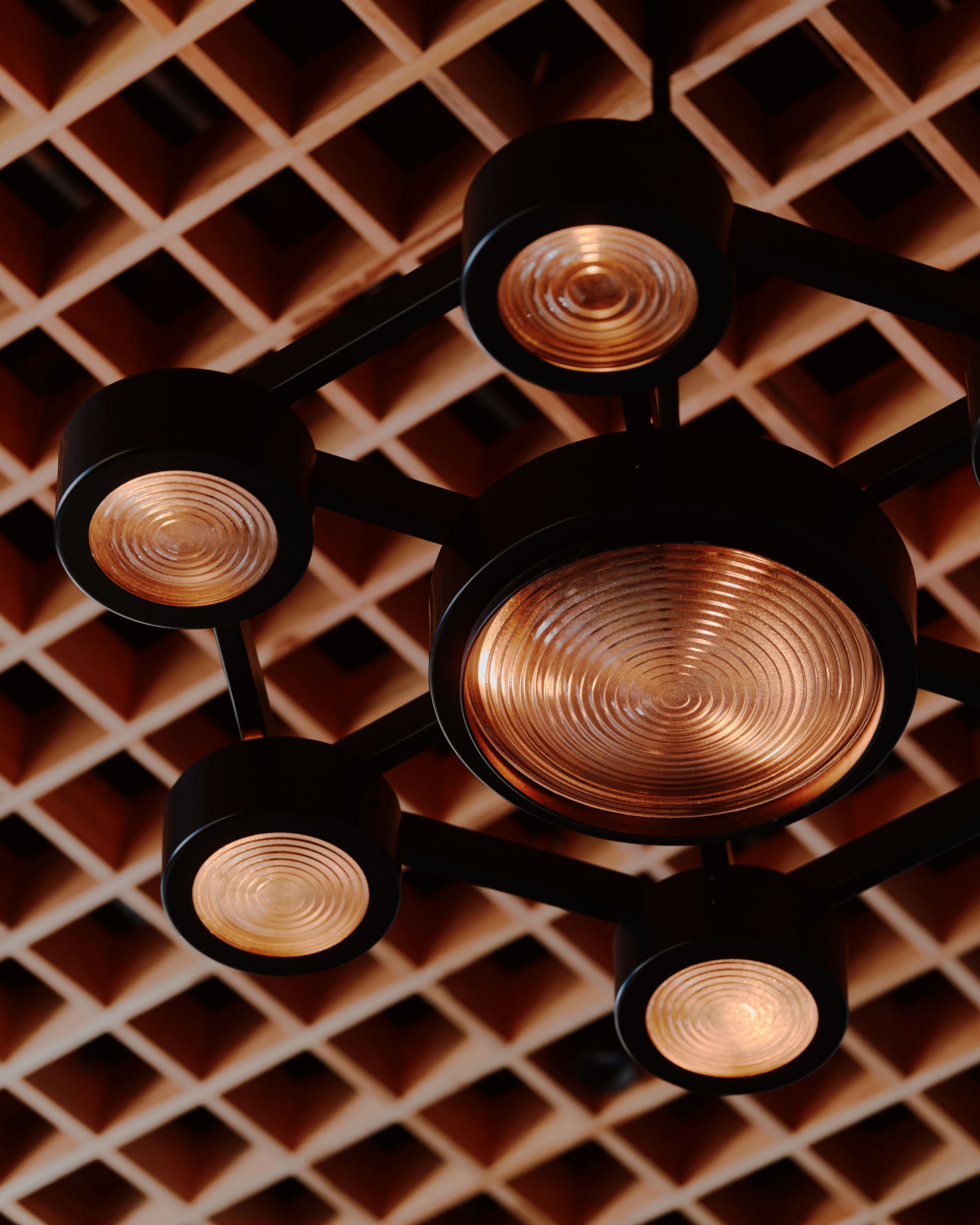
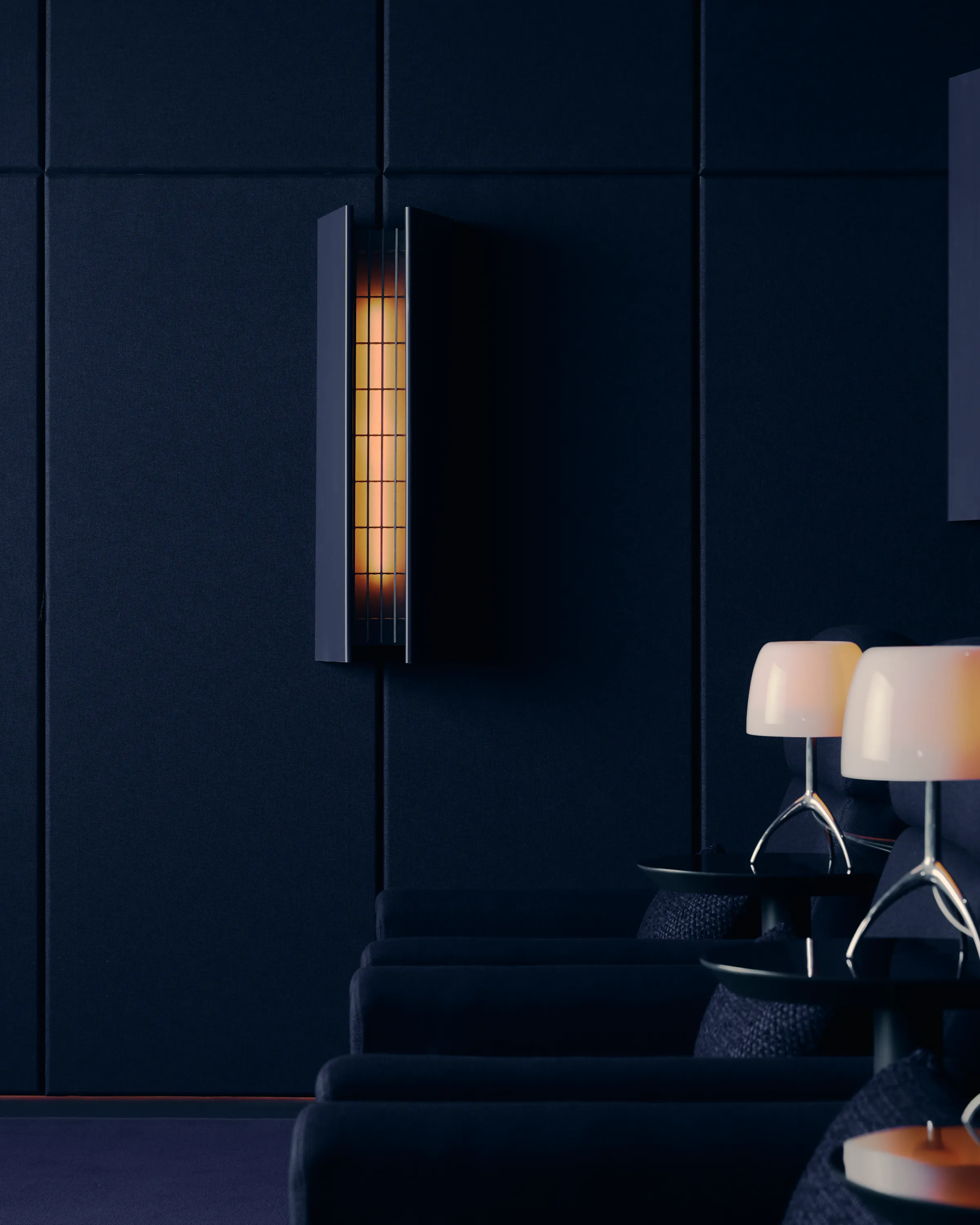
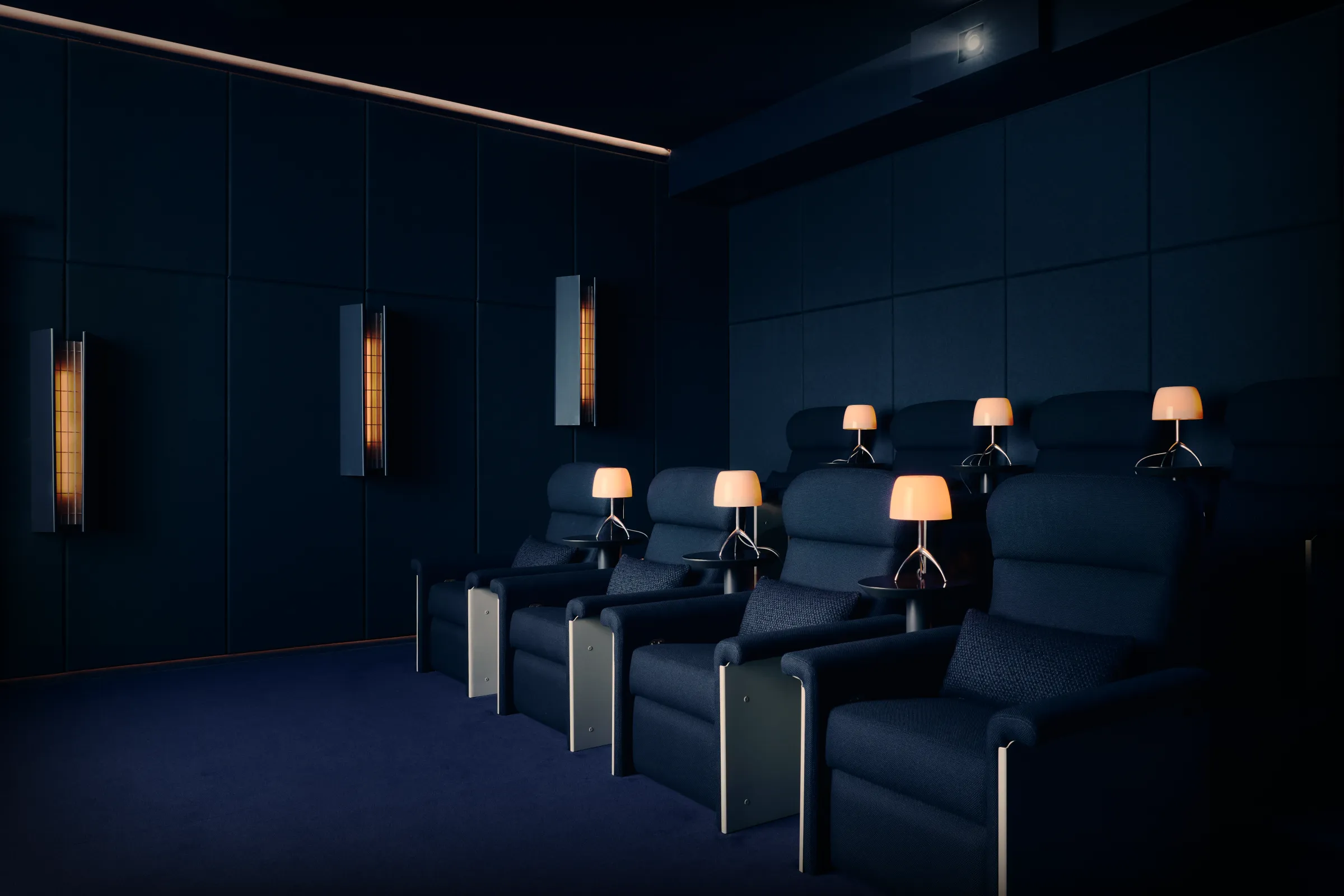
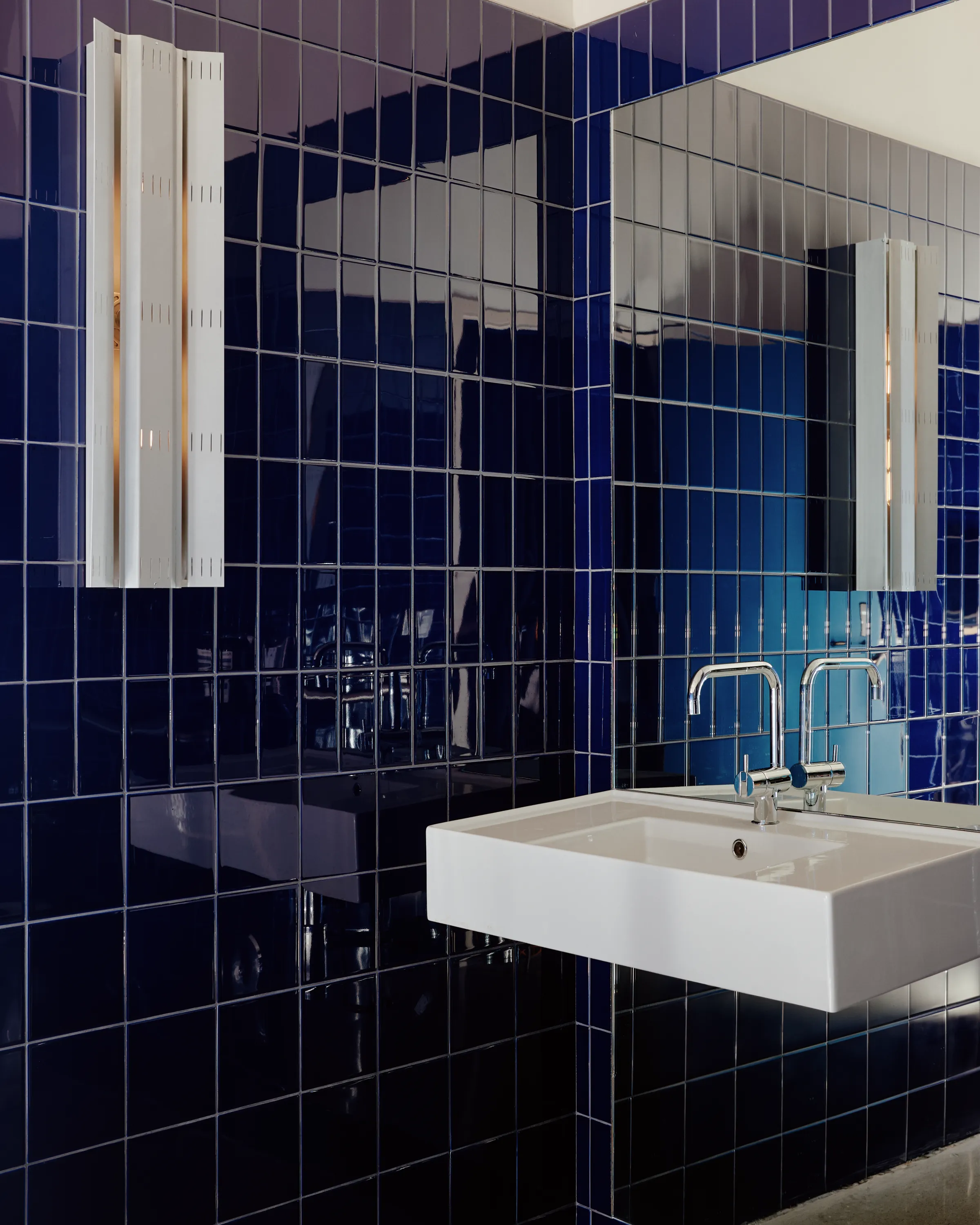
Emblematic of MUKA’s holistic design approach, the project materially draws from the apparatus of film: a custom chandelier composed of collected Fresnel lenses, abstracted from vintage set lighting, while sculptural sconces fabricated from subway grating introduce a raw, infrastructural tactility, artifacts that extend into MUKA’s second forthcoming furniture capsule. Through adaptive reuse and disciplined spatial orchestration, the project positions the workplace as both archive and incubator, where history, craft, and experimentation converge. Architecture actively participates in cultural production, structuring how ideas are formed, edited, and released.
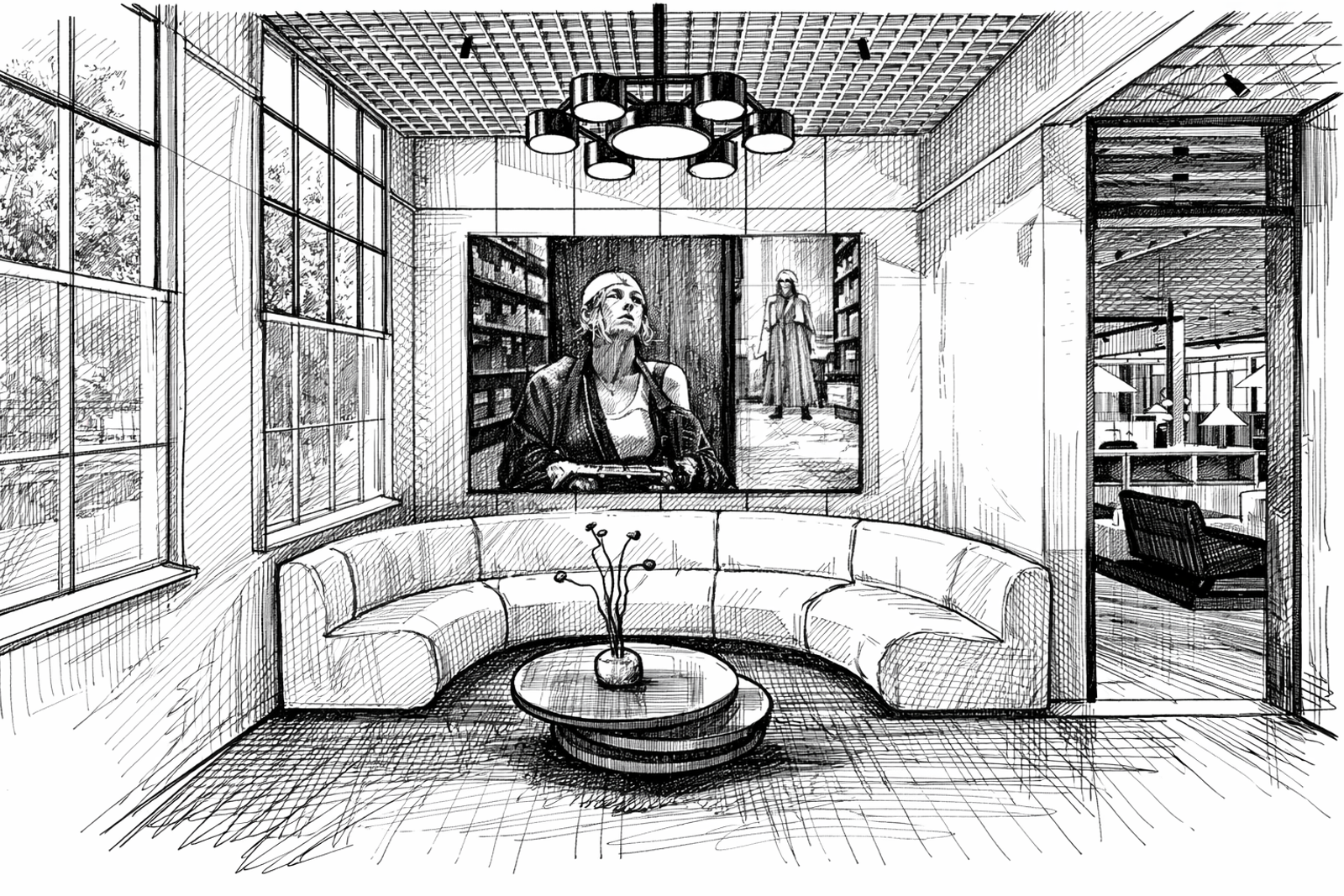
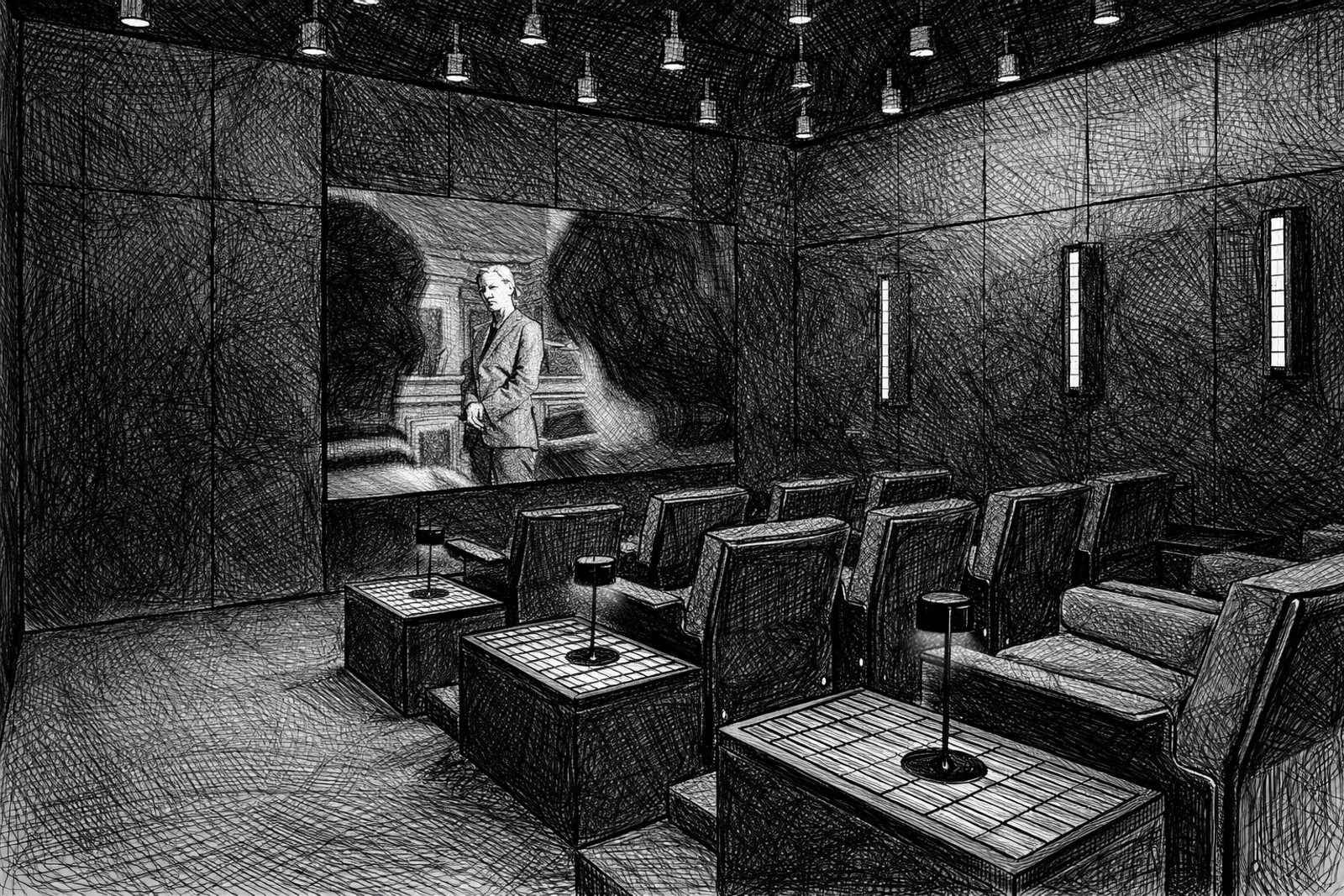
Early sketch of entry sequence
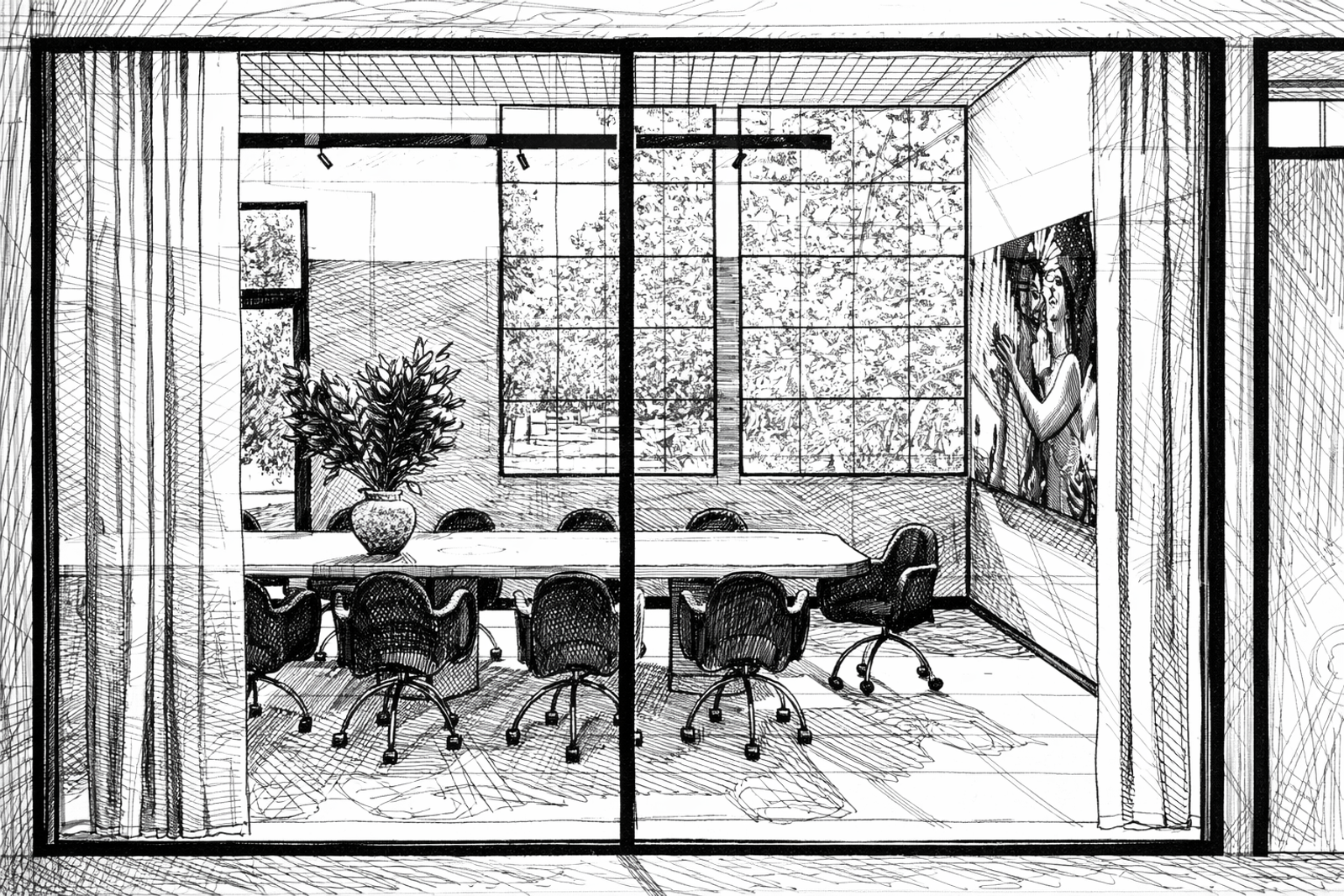
Sketch of Anora Conference Room
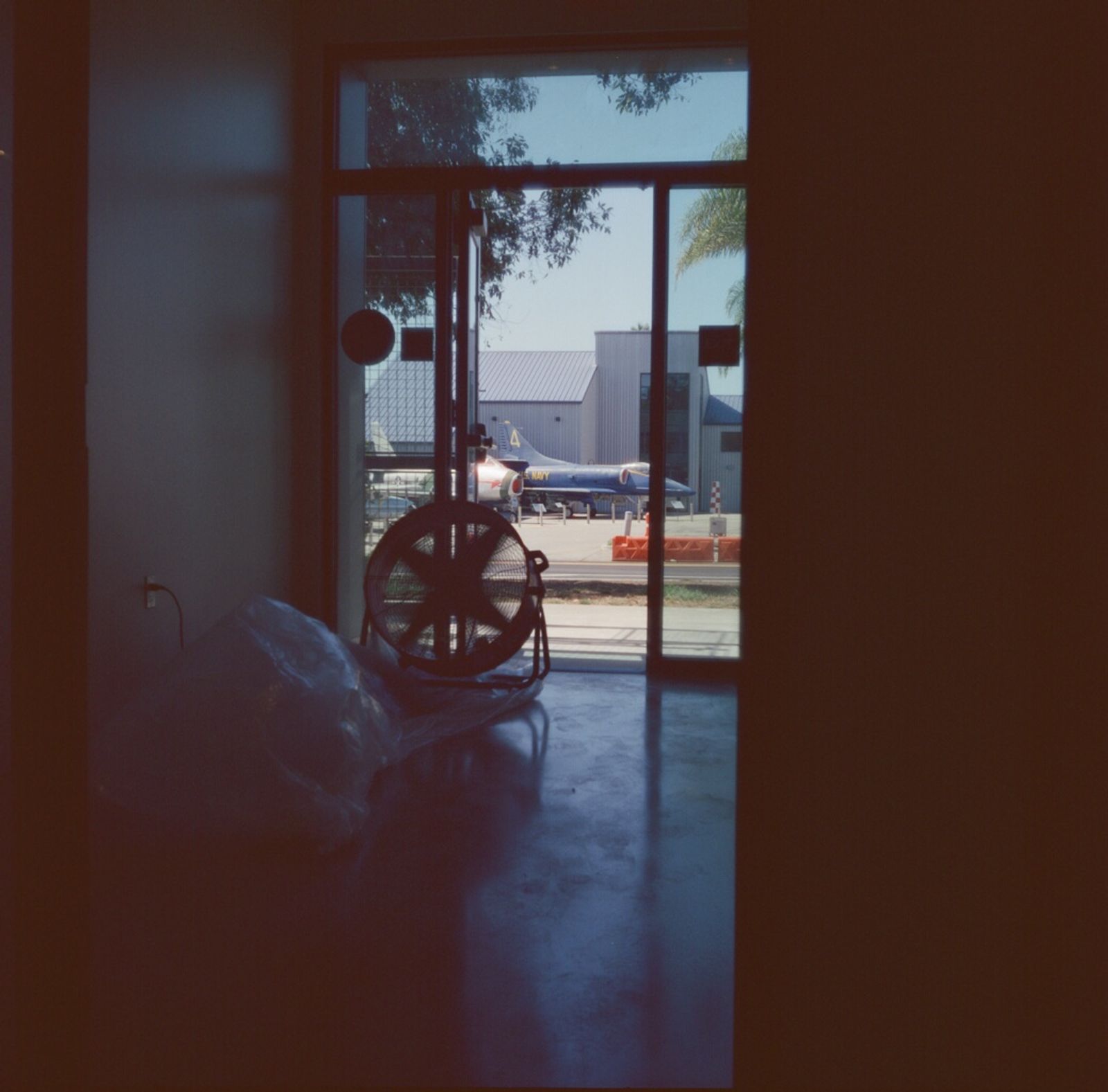
The Museum of Flying, a non-profit aerospace museum in Santa Monica, founded in 1974.